
✍️ By the Penida Island Team — local guides based on Nusa Penida · 🗓️ Last updated: November 2026 · ⏱️ ~12 min read
Peguyangan is the Nusa Penida attraction that looks impossible in photographs: a staircase of sky-blue steel bolted to a sheer limestone cliff, dropping towards the thunder of the southern ocean. It is one of the island’s most rewarding short adventures — part engineering, part pilgrimage, part walk along the edge of the world. And despite its famous name, it is not really a waterfall at all, which is exactly why it deserves an honest guide.
We are the Penida Island Team — local guides who drive these coast roads every week. We have walked the blue stairs in every season, and we have turned back ourselves when the sea was angry. This guide covers what Peguyangan actually is, how to get there, what the descent feels like, how to behave at its sacred springs, and how to pair it with the other cliff adventures of the south-west coast.
📋 Peguyangan at a Glance
Before the detail, here is the short version — the same facts we give guests in the car park before they clip on a daypack.
| ❓ | ℹ️ Details |
|---|---|
| 📍 Location | South-west coast of Nusa Penida, around 45–60 minutes by road from Toyapakeh and Banah Nyuh harbours. |
| 🎫 Entry fee | No official ticket; informal parking donations of around IDR 5,000–10,000 (≈ US$0.30–0.60) are sometimes asked. |
| ⏰ Best time | Dry season (April–October), early morning before the heat. |
| ⏳ Time needed | 1–1.5 hours for the return walk, plus travel time. |
| 🥾 Difficulty | Moderate to hard — a long, steep, exposed staircase. Sure feet required. |
| 🍽️ Facilities | Basically none — no shops, toilets or ATMs. Bring your own water. |
Fees, schedules and conditions change frequently on Nusa Penida — treat every price here as an indication and double-check locally on the day.
💦 What Peguyangan actually is
Let us clear up the biggest confusion first: Peguyangan is not a waterfall in the classic sense. There is no river here and no stream tumbling over rocks in a forest. What you will find is a sacred spring whose water seeps and gushes out of the cliff face itself, spilling in thin white ribbons into the sea below. Early maps and tour listings needed a simple label, “waterfall” stuck, and the name has followed it onto every signpost since.
The island’s geology explains why. Nusa Penida is a huge block of uplifted limestone, and rain that falls on the green interior does not run off in rivers — it sinks into the rock, travels slowly downwards through cracks and channels, and re-emerges at the coast. Where that hidden water meets the cliff line, springs are born. At Peguyangan the emerging spring water pours off the rock face directly towards the ocean, and from a distance the white line of water against dark stone looks exactly like a waterfall plunging into the sea.
But look closer and you notice something the photographs do not show: shrines. Small stone shrines are built into the cliff along the staircase, and for the local community this is first and foremost a temple site. Pilgrims come to pray and to collect holy water for ceremonies across the island. The photogenic spout is, in the local view, almost a side effect of something much older and more important.
So adjust your expectations before you go. You are not visiting a thundering cataract; you are walking down a sacred staircase to the meeting point of fresh water, ancient rock and the open southern ocean. It is quieter, stranger and — in our honest opinion — more memorable than several of the island’s headline sights.
🗺️ Getting there and what the descent is like
Peguyangan sits on the island’s south-west coast, roughly 45–60 minutes from the Toyapakeh and Banah Nyuh harbours. The roads are narrow and partly broken, so leave time for the drive. Confident riders can rent a scooter for around IDR 75,000–100,000 per day (≈ US$5–6); everyone else should take a private car and driver for around IDR 600,000–900,000 per day (≈ US$37–56). Foreign visitors also need the official Bali tourism levy of IDR 150,000 (≈ US$9), paid once per trip, cashless, via the Love Bali portal.
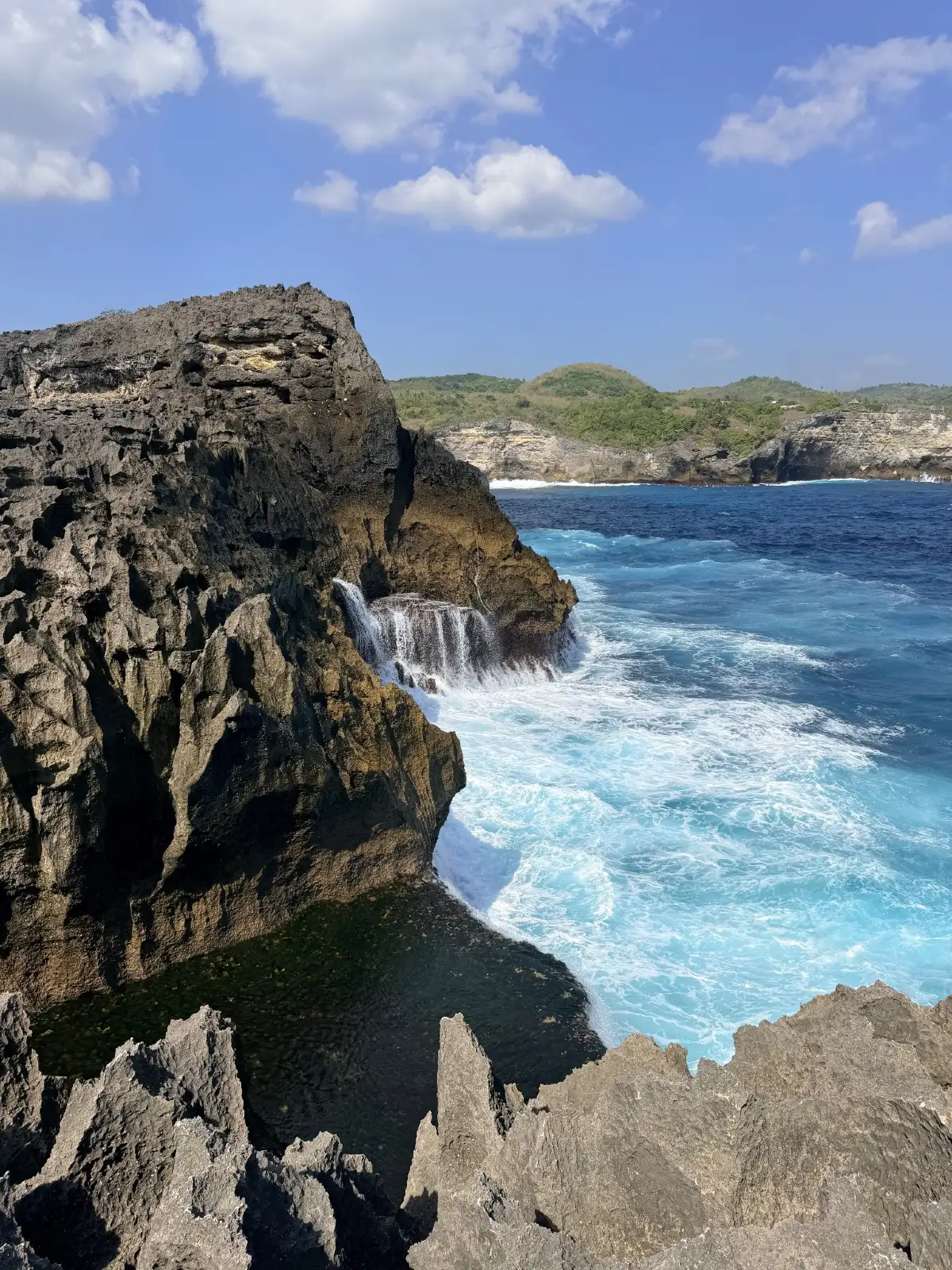
From the parking area, a short flight of stone steps brings you to the start of the famous staircase: hundreds of steel steps painted sky blue, welded into flights and fixed directly onto the cliff. There are handrails on both sides for almost the entire way down, plus small landings where you can step aside, catch your breath and let locals carrying water jugs pass. Some sections hug the rock face; others are open to the drop, with nothing but railing and nerve between you and the sea.
Most visitors take around 20–30 minutes to descend at a careful pace, and noticeably longer coming back up — the return climb is the real workout. The full round trip is roughly 2 kilometres and takes about 1–1.5 hours at a relaxed speed with photo stops. The soundscape changes as you go: wind at the top, then the boom of swell through the rocks, then spray hissing on the steepest flights.
One practical note: when the sea is rough, salt spray can leave the lowest steps slick. Test each step with your hand where it looks shiny, keep a firm grip on the railing, and never hurry on the descent. These stairs reward slow feet and punish rushed ones.
🛕 Sacred springs and temple etiquette
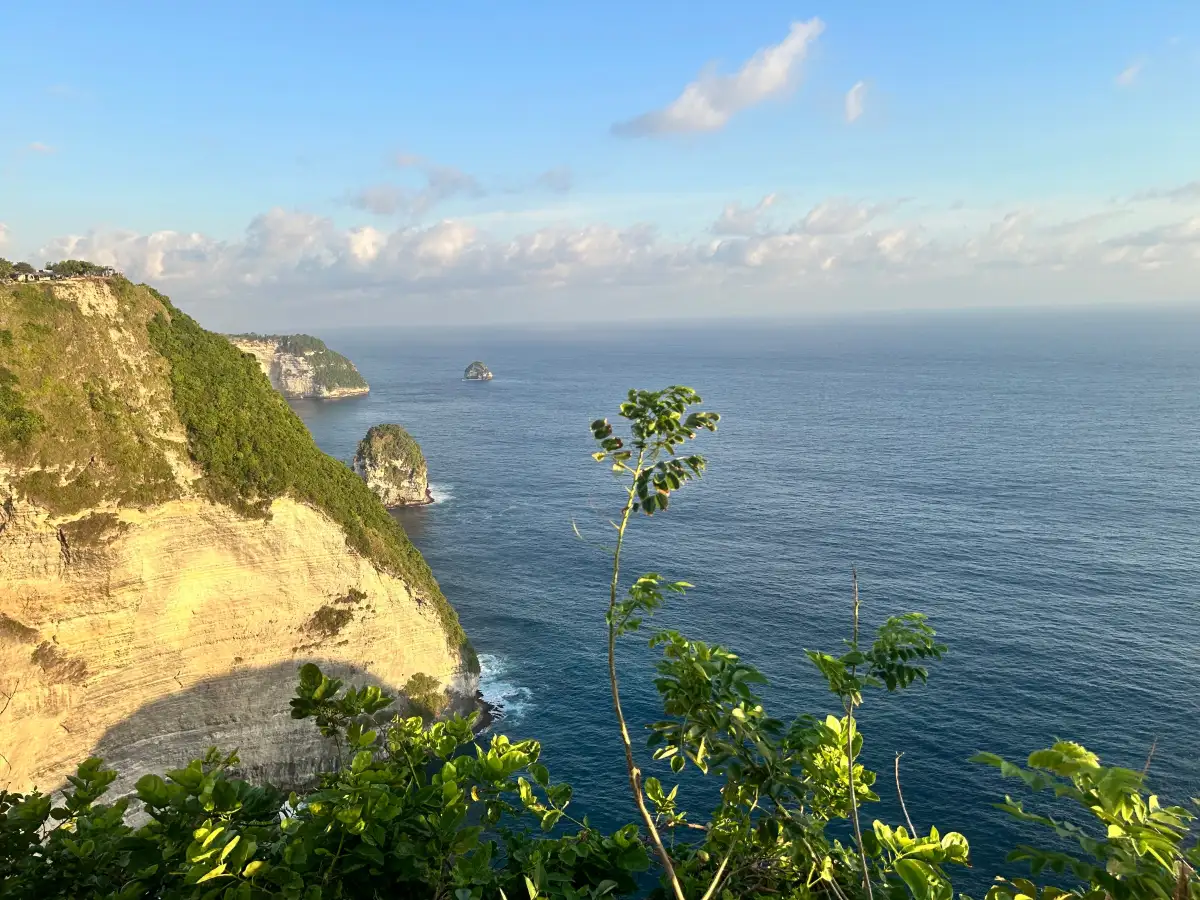
Peguyangan is a living place of worship, not a film set. Local families and pilgrims come down these same stairs to pray at the shrines and to collect holy water, sometimes carrying it back up in plastic jugs for ceremonies far away. When tourists and worshippers share a staircase bolted to a cliff, a little awareness goes a long way.
Dress modestly. A sarong and sash are the proper wear at the shrines — they are often available to borrow near the top — but at minimum wear a shirt with sleeves and shorts or a skirt to the knee. Move quietly near the shrines, never climb on them for photos, and step around any offerings left on the steps. If you would like to photograph someone praying, ask first with a smile; most people are happy to say yes when asked politely.
And the water itself? Treat it as what it is — temple water. Do not bathe in the spring channels, do not wash sandy hands or feet in the holy water troughs, and resist the urge to fill a bottle from a shrine tap. The spring flows to the ceremonies; the ocean gets the rest.
⚠️ Safety first: The entire route is exposed cliffside. Stay on the stairs, keep one hand on the railing, and never lean out over the edge for a photo — cliff edges on Nusa Penida crumble without warning. If the steps are wet from rain or spray, or if waves are throwing spray onto the lower sections, do not descend. Wind gusts at the open corners are stronger than they feel.
⏰ Best time to visit and conditions
Timing decides whether Peguyangan is a delight or an ordeal. The best window is the dry season from April to October, when the stairs stay dry, the sea sits calmer and the route is at its safest. The wet season from November to March brings a greener, quieter island, but showers can arrive fast — and rain on blue steel is exactly as slippery as it sounds.
Within any given day, go early. Between 07:00 and 09:00 you will usually have the stairs almost to yourself, the light on the cliffs is soft and gold, and the air is still cool enough that the climb back up feels pleasant. By late morning the rock radiates heat, the steel gets hot underfoot, and the return climb turns into honest work.
Watch the sea as closely as the sky. Big southern swells arrive on this coast with little warning in the forecasts most travellers see, and when they do, the bottom of the staircase catches spray. If you stand at the top and see white water exploding against the cliffs below, skip the descent and come back another day. The spring has been running down this cliff for thousands of years — it will still be there tomorrow.
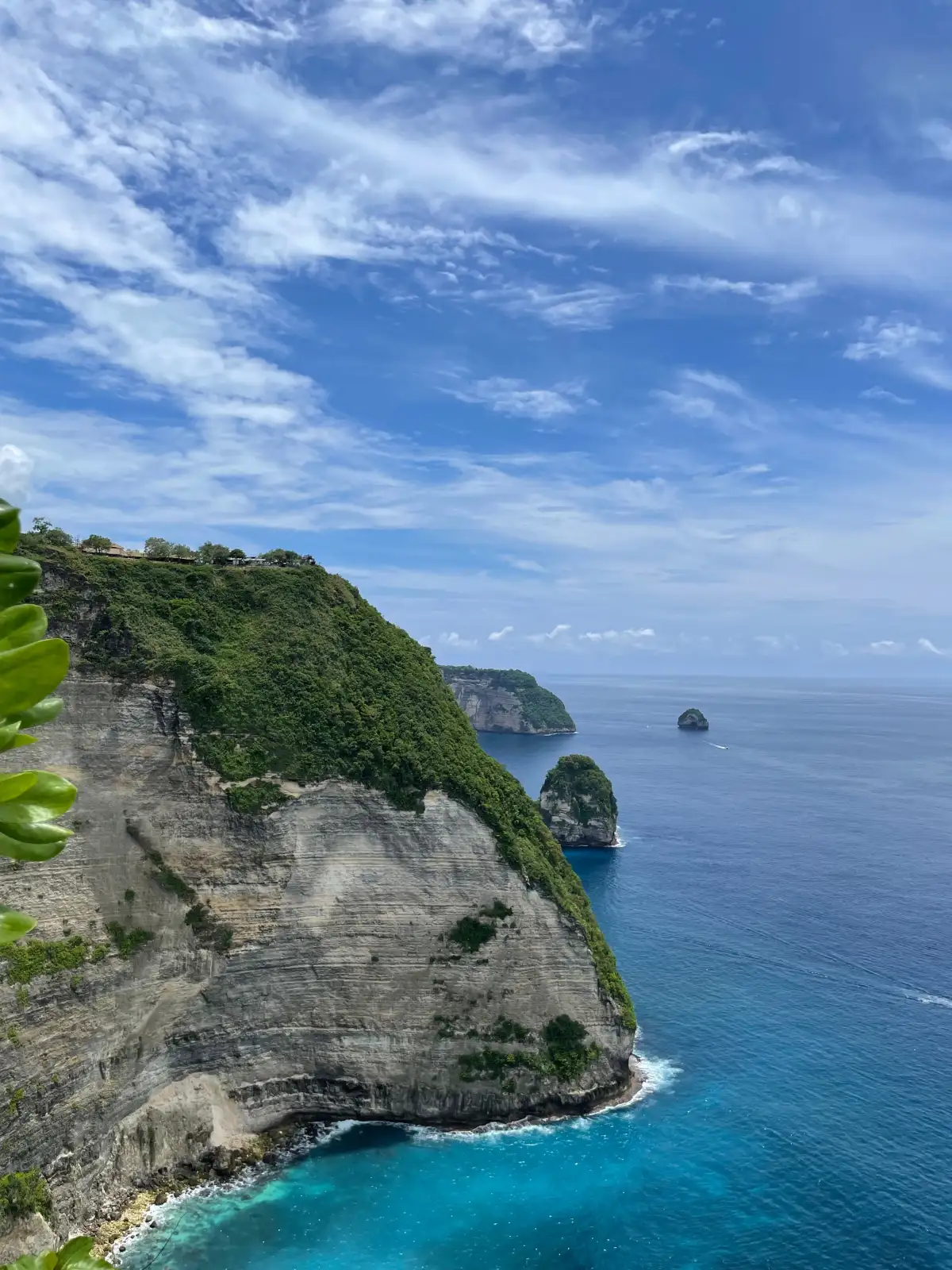
🥾 Fitness and safety: who should skip it
We would rather lose a photo opportunity than carry someone up those stairs. Peguyangan involves no technical climbing — if you can manage a long, steep stadium staircase in tropical heat, you can do this — but it is sustained, exposed and unforgiving of carelessness. Going down feels easy; going up is where people suffer.
Skip it if you have knee, hip or heart problems, if vertigo gets the better of you, if you are carrying a child too young to manage stairs alone, or if your only footwear is flip-flops. The staircase deserves shoes with real grip and two free hands, so use a small daypack rather than swinging bags and phones.
For everyone else: pace yourself on the landings, drink before you feel thirsty, and step aside to let people pass rather than rushing. Carry 1.5–2 litres of water per person. If the climb back up starts to feel too big, stop at the next landing, breathe, and take it one flight at a time — visitors of all ages complete this walk every week by doing exactly that.
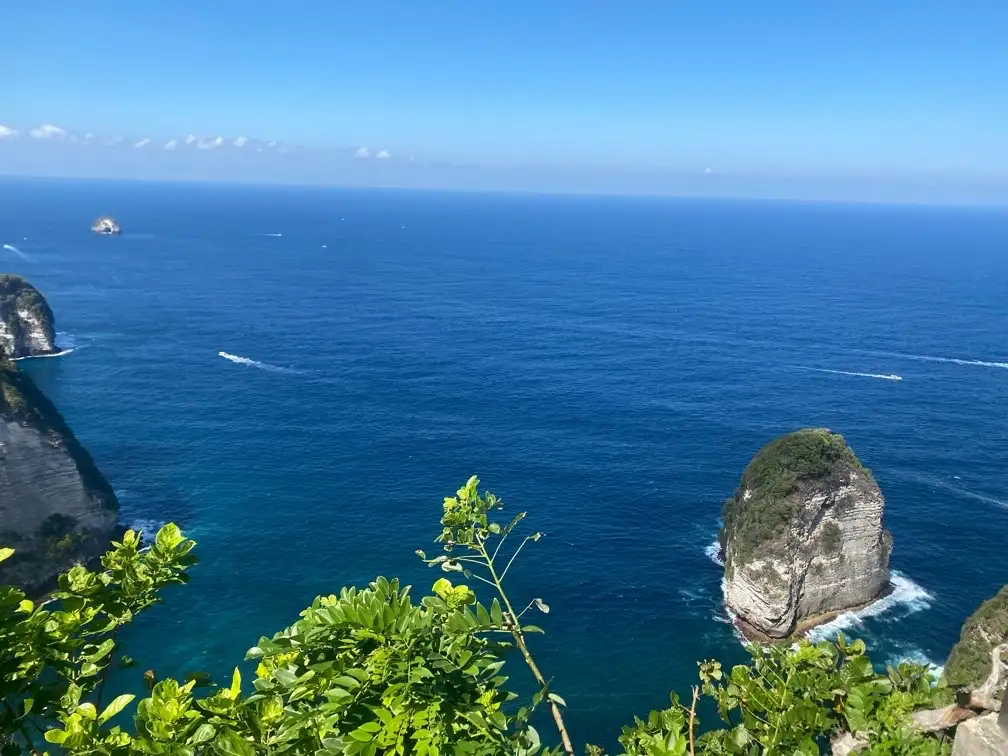
🍽️ Facilities and what to bring
Here is the shortest section in this guide: there are basically no facilities at Peguyangan. No warung, no toilet, no ATM, no shade structure waiting at the bottom. The nearest proper services — warungs, ATMs, toilets — are back in the main towns around Ped and Toyapakeh, so organise yourself before you drive out.
What to pack:
- 💧 1.5–2 litres of water per person, minimum — more in the hottest months.
- 👟 Closed shoes with real grip; the steel steps eat soft soles.
- 🧴 Sunscreen, a hat and sunglasses — shade appears only on some middle flights.
- 🎒 A small daypack that leaves both hands free for the railing.
- 💵 Small notes for the informal parking donation.
- 📱 Offline maps downloaded before you leave — signal is patchy on this coast.
💡 Local tip: Leave a change of clothes and a towel in the car or scooter. Peguyangan pairs beautifully with a fresh-water swim afterwards, and nobody enjoys a bumpy island road in salty, sweaty clothes.
👨👩👧👦 Pairing Peguyangan with Seganing and Temeling
Peguyangan rarely travels alone. On the same stretch of coast sit two more cliff adventures, and together they make the best “adventure morning” on Nusa Penida.
The closest is Seganing Waterfall, near the same turn-off: a thin ribbon of spring water pouring straight off the cliff edge into a surge channel below. It is the most photogenic fall on the island — but it is genuinely seasonal, and its trail involves bamboo ladders, so read our guide first and only go in dry, calm conditions.
A short drive away, the Temeling natural pools offer the reward swim: two spring-fed pools perched above a small white-sand cove, reached by a forest staircase. Do Peguyangan first, while your legs are fresh and the air is cool, then let Temeling wash the salt off before lunch.
Realistically, pick two of the three in a single morning. Adding Kelingking or the west-loop icons to the same day looks efficient on a map and feels miserable in practice — the roads, not the distances, eat the clock. Save Broken Beach and Angel’s Billabong for another day and you will enjoy both far more.
❓ Frequently Asked Questions
Is Peguyangan a real waterfall?
Not in the classic sense. It is a sacred spring whose water emerges from the cliff face and spills off the rock into the sea in thin white ribbons, which looks like a waterfall from a distance. There is no river and no stream. Think of it as a holy spring and cliff spout with blue stairs — one of the island’s most unusual sights precisely because it is not a postcard waterfall.
How many stairs are there, and how hard is the climb?
There are several hundred steps — there is no official count, and every visitor counts differently — welded into steep flights down the cliff face. The round trip is roughly 2 kilometres and takes most people 1–1.5 hours. No technical skill is needed, but the stairs are long, exposed and hot, and the climb back up is a real workout. Sure-footed travellers of most ages manage it comfortably with water and patience.
Can you swim at Peguyangan?
No. The spring water at the bottom pours into a rocky surge channel pounded by the open southern ocean, and there is no beach. Nobody should enter the water here — the sea below the cliff is powerful and unpredictable. If you want a swim, plan one for afterwards: the Temeling natural pools a short drive away are the perfect fresh-water reward.
Is Peguyangan safe?
For healthy, sure-footed visitors in dry weather and a calm sea, yes — the stairs are solid, with handrails for nearly the whole way. The real risks are the cliff edge, wet or slippery steel, heat exhaustion on the climb up, and swell spray at the bottom. Never descend in rain or when waves are throwing spray onto the steps, stay on the staircase, and turn back if anything feels wrong.
What should I wear at Peguyangan?
Wear closed shoes with grip — trainers or sturdy sandals, never flip-flops — and light clothes that cover shoulders and knees, or bring a sarong and sash for the shrines. Carry everything in a small daypack that leaves your hands free for the railing. Skip loose scarves and wide hats on windy days, and leave the swimwear at home; this is not a swimming spot.
🏁 Final thoughts
Peguyangan rewards travellers who come for the right reasons. It is not a tick-box waterfall; it is a staircase pilgrimage to a place where fresh water, old shrines and the raw southern ocean share a few square metres of cliff. Go early, go in dry weather, dress with respect and take the stairs slowly — the island will do the rest.
If this corner of the coast has caught your imagination, keep exploring: our guides to Seganing, the Temeling pools and the west coast’s icons will help you build a Nusa Penida trip that goes well beyond the postcards.
🔗 Related Nusa Penida Guides
- 🧗 Seganing Waterfall: The Hidden Cliff Fall Guide — the bamboo-ladder trail and when the fall actually flows.
- 🏊 Temeling Beach & Natural Pools — spring-fed pools perched above a quiet white-sand cove.
- 🌊 Angel’s Billabong: The Natural Infinity Pool Guide — tide and swell rules for the west coast’s famous rock pool.