
✍️ By the Penida Island Team — local guides based on Nusa Penida · 🗓️ Last updated: November 2026 · ⏱️ ~11 min read
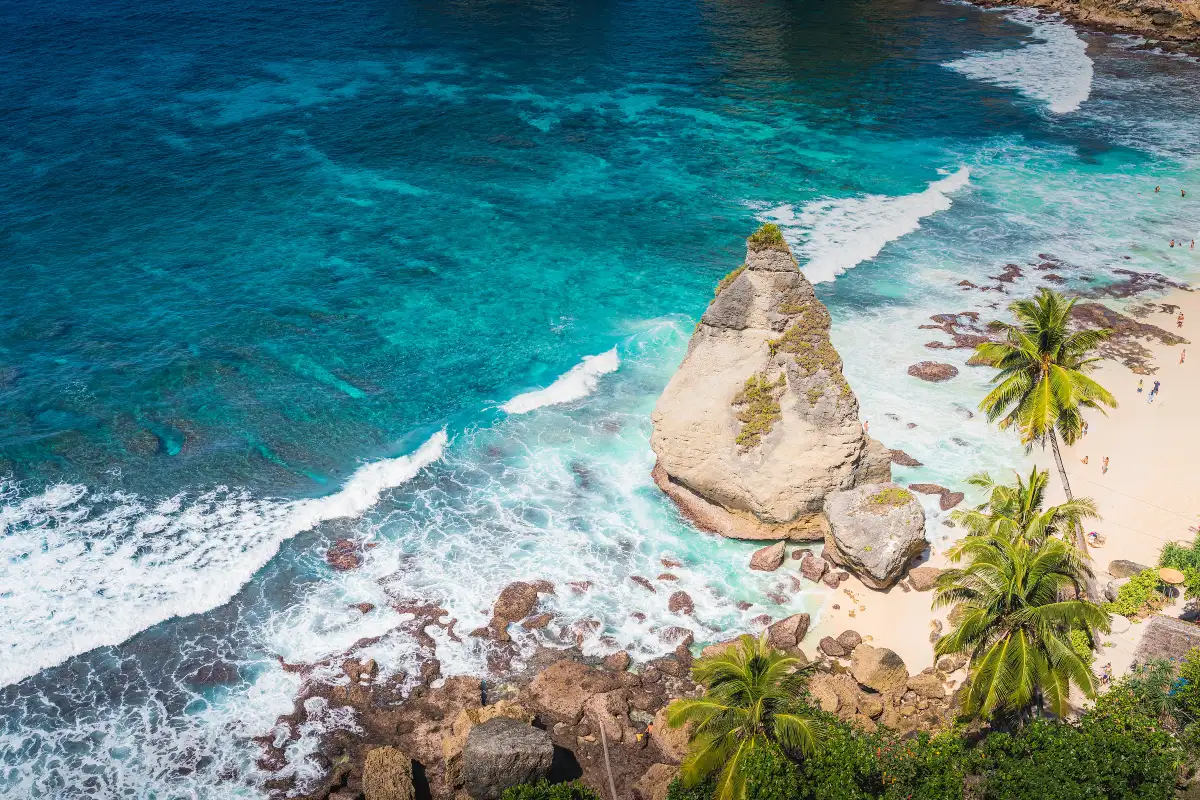
Two of the most beautiful beaches in Bali share a single staircase on Nusa Penida’s east coast. Diamond Beach is the one you have seen on your feed: a curve of pale sand patrolled by jagged limestone sea stacks, with palms leaning over the sand at the base of the cliff. Its neighbour Atuh Beach is the gentler twin — a wider crescent, calmer water, beanbags in the shade, and warungs serving grilled fish under the trees.
We are the Penida Island Team, local guides based on the island, and the sunrise run to Diamond and Atuh is the trip we are asked for most after Kelingking. The east coast is quieter than the west, the roads are rougher, and the light is at its best before most visitors have even finished breakfast in Sanur. This guide covers the famous stairs, the fees, when to come for photos, whether the swimming is safe, and how to build a full east-coast day around the two coves.
📋 Diamond Beach and Atuh Beach at a Glance
| ❓ | ℹ️ Details |
|---|---|
| 📍 Location | East coast of Nusa Penida, around 45–60 minutes’ drive from the Banah Nyuh and Toyapakeh harbours |
| 🎫 Entry fee | Around IDR 25,000–35,000 per person (≈ US$1.50–2), usually including parking; one ticket covers both coves |
| ⏰ Best time | Sunrise to mid-morning for light, cool air and quiet stairs |
| ⏳ Time needed | 2–3 hours to enjoy both coves properly |
| 🥾 Difficulty | Moderate — a long carved staircase with uneven, sometimes slippery steps |
| 🍽️ Facilities | Warungs and toilets at both coves; beanbag rental on Atuh |
💎 What makes Diamond and Atuh special
Diamond and Atuh sit side by side in adjoining coves, divided by a forested headland and reached by the same long staircase carved into the cliff. The scenery is classic uplifted-limestone Nusa Penida: vertical walls, green jungle spilling over the edge, and — Diamond’s signature — a family of sharp sea stacks standing just offshore like the masts of wrecked ships. Sea stacks like these are all that is left of the cliff line after waves spend centuries picking out the softer rock; give them a few thousand more years and they will be gone too. Photograph them while you can.
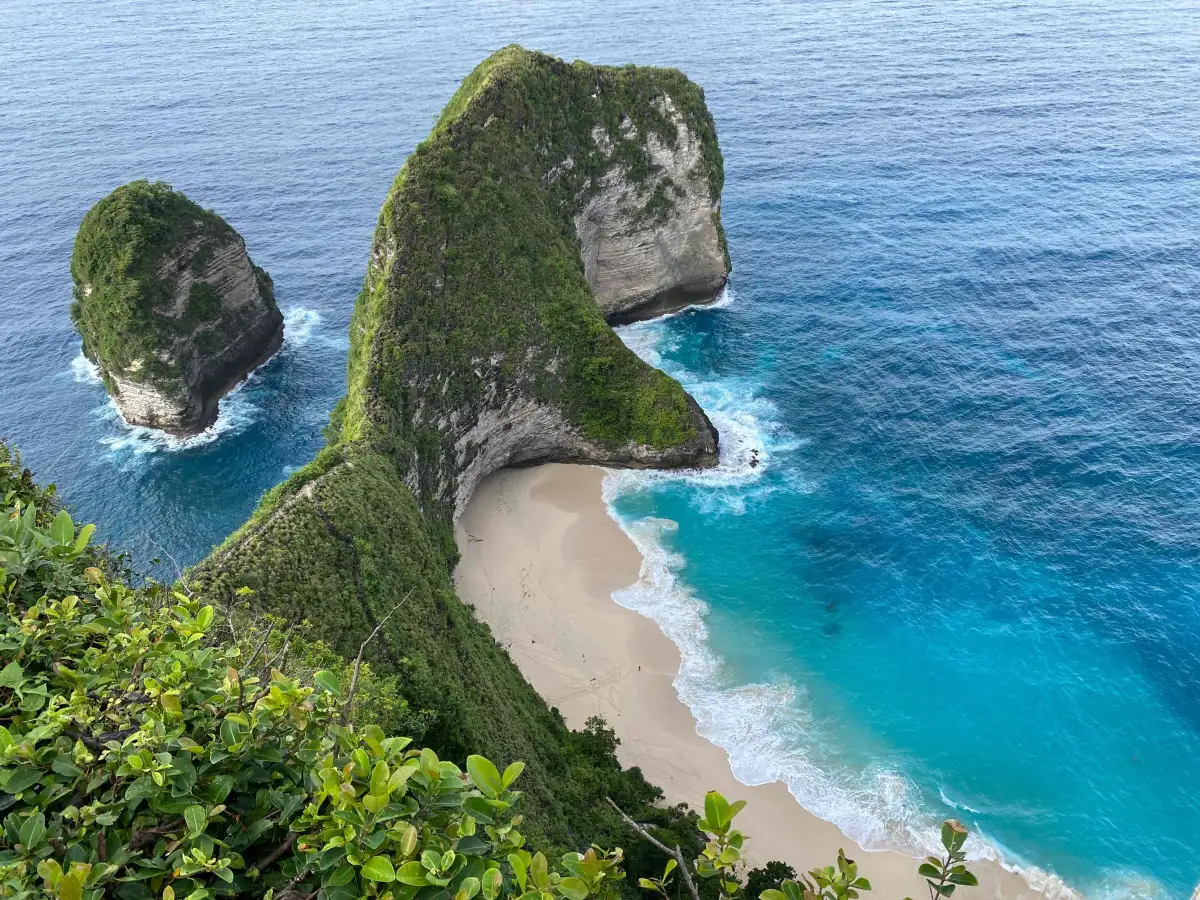
Atuh, on the far side of the headland, trades drama for charm. The sand is broader and golden, the entry into the water is gentler, and a natural rock arch closes the southern end of the cove. Beanbags line the shade line, and this is the beach where you will actually want to linger for an hour or two. The simplest way to remember them: Diamond is the photo, Atuh is the afternoon.
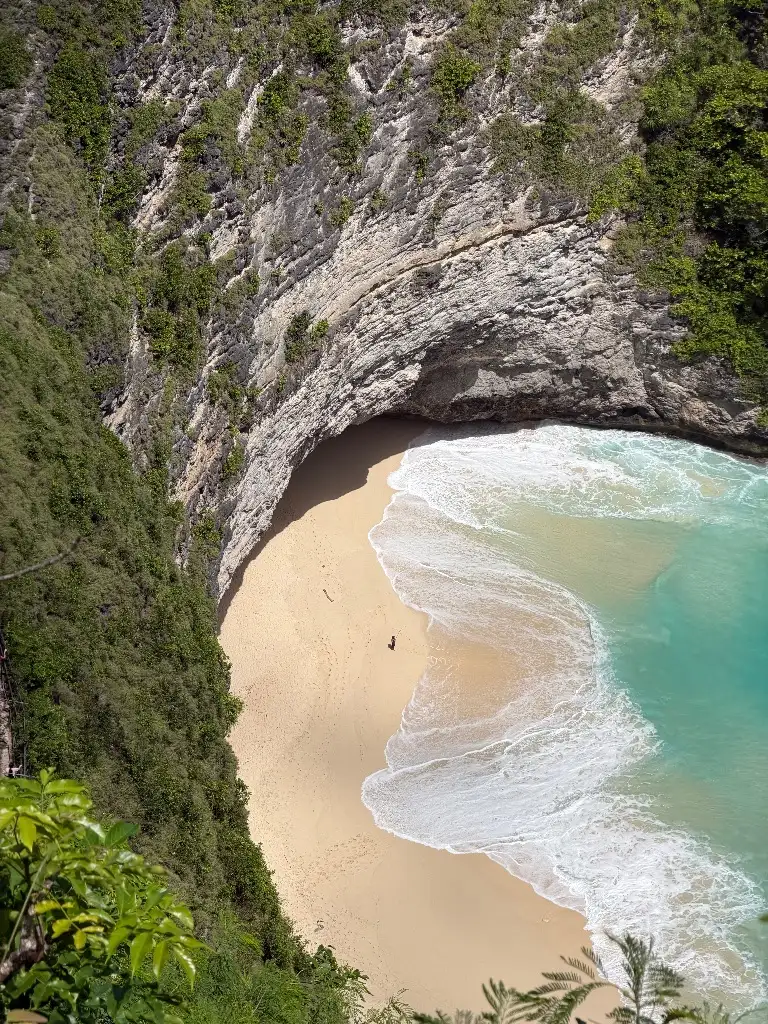
Give yourself time to see the coves as a pair. A short walk along the clifftop connects the viewpoints above both beaches, and the contrast is half the pleasure: one cove loud with surf and drama, the other lazy and bright. We have guided guests who planned a thirty-minute photo stop here and were still on the sand at lunchtime — the east coast has that effect, and the warungs are very happy to extend it.
🗺️ How to get there and what it costs
The beaches are on the east coast, around 45–60 minutes’ drive from the Banah Nyuh and Toyapakeh harbours in the north-west. The roads narrow and deteriorate as you go, and the last kilometres pass through villages and farmland, so take them slowly. A scooter (around IDR 75,000–100,000 per day) works for confident riders, but for sunrise trips we recommend a private car and driver (around IDR 600,000–900,000 per day) — you will want your hands free for coffee, and a good driver knows exactly where the staircase starts. Day-trippers coming straight from Bali should note that this is the far side of the island: take an early boat from Sanur (the first departures leave around 07:00), or use the quieter Kusamba–Sampalan crossing on the east side for a shorter road.
🎟️ Tickets: one ticket covers both coves and usually includes parking: around IDR 25,000–35,000 per person (≈ US$1.50–2), paid at the booth at the top of the stairs. Fees, schedules and conditions change frequently on Nusa Penida — treat every price here as an indication and double-check locally on the day.
Geographically, this is the opposite corner of the island from Kelingking and the west loop, so plan your days accordingly — our best things to do in Nusa Penida guide shows how to split the island sensibly without spending half your trip in a car.
⏰ Best time to visit
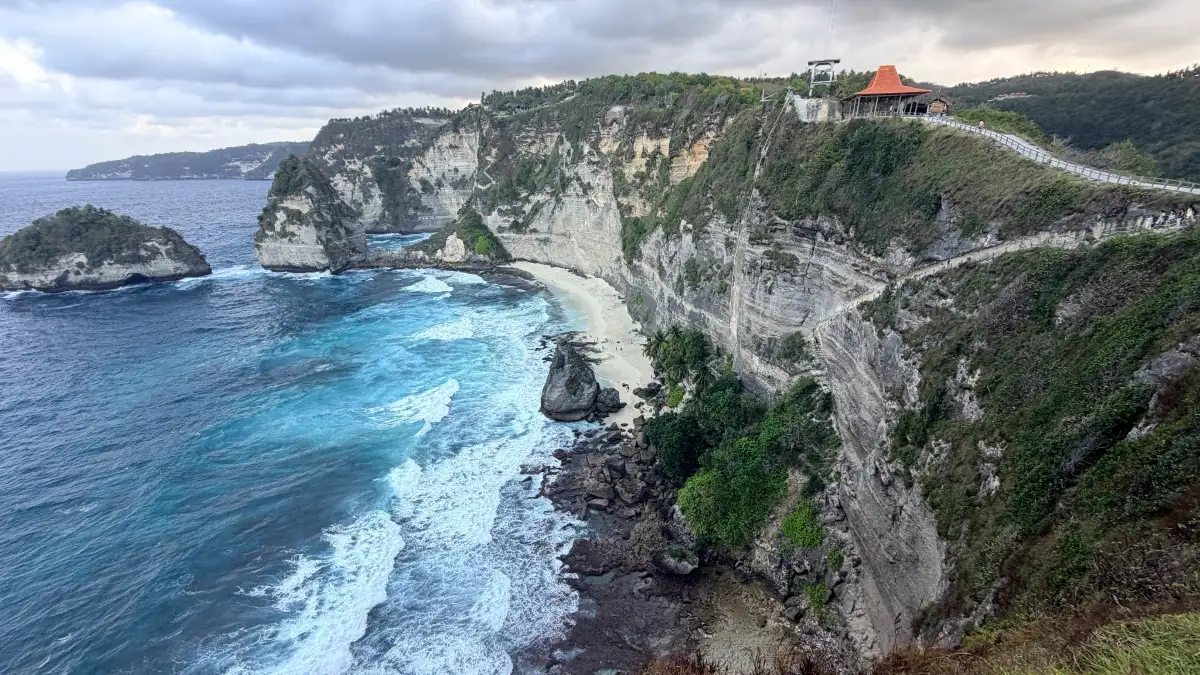
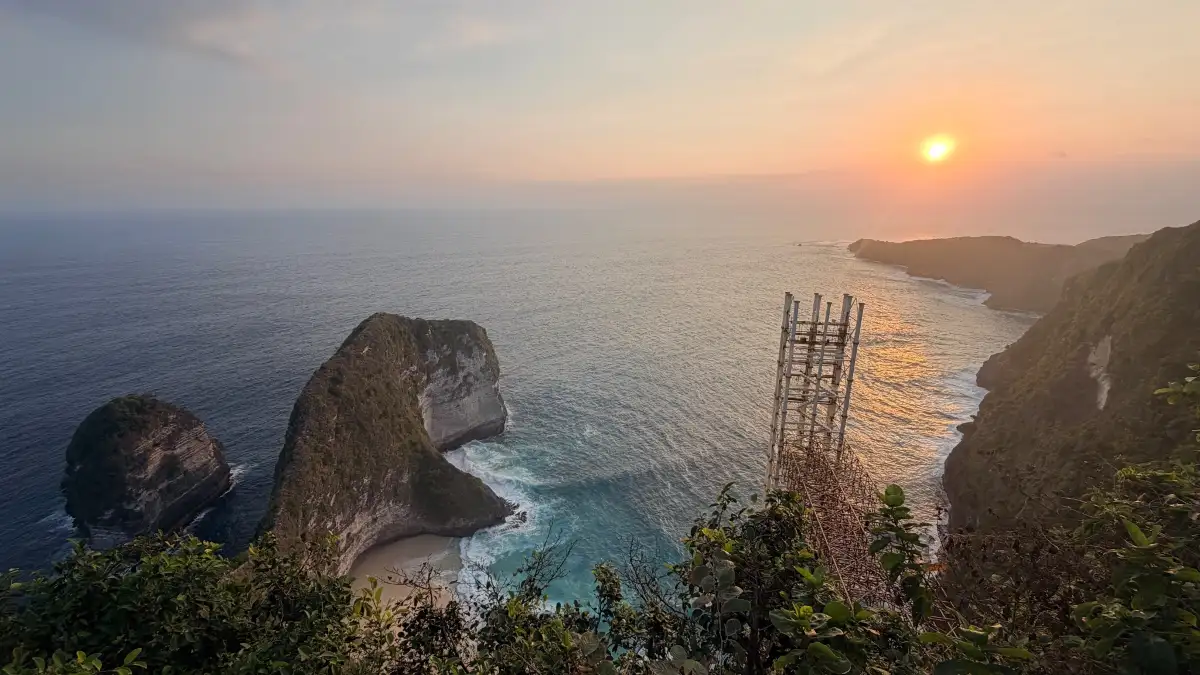
This coast faces east, which makes it the sunrise side of Nusa Penida. First light hits the sea stacks and turns the water rose-gold, the temperature is kind, and you will often share the staircase with only a handful of other early risers. Tour groups generally arrive mid-morning; by 10:00 the good photo angles are busy and the sand is hot enough to matter.
If sunrise is a stretch, aim for 07:00–09:00 instead. Midday light flattens the water and bleaches the sand. Late afternoon has its fans — the arch at the end of Atuh catches lovely warm light — but the coves fall into cliff shadow earlier than you would expect, and the climb back up the stairs in the heat of the day is no joke.
Season-wise, the dry season from April to October brings the calmest sea and the most reliable sunrises. In the wet season (November–March) the mornings are often clear anyway — showers tend to arrive later in the day — but the stairs can be wet and slick after rain, so take the descent slowly and hold the handrail.
If you commit to sunrise, prepare the night before: charge your phone for the torch, eat something small before the drive, and agree the plan with your driver. The staircase in half-darkness deserves a clear head — keep to the centre of the steps, use your light, and give the clifftop edges respectful space until you can see them clearly. Watching the first light arrive from the platform above the coves is one of the best free shows in Bali.
🥾 The stairs and what to expect
The staircase is both the adventure and the filter. It is carved straight into the cliff face, with uneven stone steps, sections of handrail, and a couple of platforms where everyone stops ‘for the view’ — which, translated honestly, means to catch their breath. At a relaxed pace the descent takes around ten minutes; coming back up takes most people noticeably longer, and there is no lift.
The steps are worn smooth in places and can be slick after rain or sea spray, so wear shoes with grip and save the barefoot walking for the sand. Near the top the path forks: one branch drops straight down to Diamond, the other continues over the shoulder of the headland and down to Atuh. Families with children manage both coves fine at a slow pace — it is the climb out that little legs remember, so carry water and take the rests you need.
Photographers should pace the descent: the best staircase frames are on the way down, with the sea stacks lined up between the cliff walls, and the light changes by the minute. The steps also pass sections where the cliff overhangs and the temperature drops a few welcome degrees — some of the only shade on the whole route. Coming back up, count your rests rather than the steps; there are platforms to lean on, and nobody has ever been judged for using them.
💡 Local tip: do Diamond first, while the tide is low and the light is clean, then walk across to Atuh for a coconut and breakfast at the warungs. The beanbags fill up with tour groups by late morning — beat them there and Atuh feels like your own private beach club.
🏊 Can you swim at Diamond and Atuh?
Both coves are open to the same ocean and neither ever has a lifeguard. Atuh is usually the more swimmable of the two: a sandy entry, a gentler shorebreak and a wider stretch of calm water, especially around mid-to-high tide in the dry season. At Diamond, rocks and a punchier shorebreak make swimming a fair-weather activity — on a flat morning you will see guests bobbing happily near the middle of the beach, but when a swell runs, nobody should be in the water at all.

Low tide is the interesting time on both beaches: sand bars and shallow pools appear, and the sand doubles in width. Reef shoes are worth packing, because the sea floor mixes soft sand with chunks of dead coral. Our honest advice: swim at Atuh on a calm day, paddle at Diamond, and treat any shorebreak you would not be happy body-surfing as a hard stop.
⚠️ Safety first: there are no lifeguards on Nusa Penida. The shorebreak on this coast can switch from gentle to heavy within an hour, and swimming directly under a tall cliff puts you a long way from help. If waves are breaking heavily on the sand or white water looks angry near the rocks, wade knee-deep at most and keep children in the shallows.
🍽️ Facilities, warungs and homestays
Atuh has the better setup: a line of warungs under the trees serving coconuts, coffee, mie goreng and grilled fish, beanbags for rent for a small fee, and simple toilets. Diamond’s facilities are more modest — a few drink stalls near the base of the stairs and shade from the cliff in the afternoon. Bring cash in small notes; nobody on the sand is taking cards. Portions are honest and the grilled fish with sambal is excellent when the morning catch has been good; toilets are basic, so keep tissue and small change with you.
A handful of simple homestays have appeared on the east coast in recent years, and they are popular with sunrise photographers who would rather not drive in the dark. They are basic — think fan rooms, cold showers and early breakfasts — so book ahead in high season if a 05:00 start at Diamond sounds like your kind of morning.
👨👩👧👦 An east Penida day plan
The east coast rewards a full morning, and the stops sit close enough to link in one loop. The classic run, which we drive constantly:
- 🌄 05:45 — sunrise at Diamond Beach; arrive in the dark and bring a torch for the stairs.
- 🥥 08:00 — walk across to Atuh for breakfast, a coconut and a swim.
- 🏝️ 09:30 — the Thousand Islands viewpoint (Pulau Seribu), a short drive away, where green islets scatter across electric-blue water.
- 🌳 10:30 — Rumah Pohon Molenteng, the famous tree house on the cliff edge; day visitors pay a small fee, and the rooms book out far ahead.
- 🌿 15:30 — the Teletubbies Hills near Tanglad in soft afternoon light, or the wild cove of Suwehan if your legs still want steps — see our Suwehan Beach guide.
Two warnings from experience: distances here are short but the roads are slow, so add buffer time everywhere; and mobile signal drops on this side of the island, so download offline maps before you leave the harbour. Fill your fuel tank before you leave the harbour area, too — petrol options thin out quickly once you turn onto the eastern roads.
❓ Frequently Asked Questions
Diamond or Atuh — which is better?
Visit both — one ticket covers them and they are only a few minutes apart on foot. Diamond Beach is the dramatic one, with the sea stacks and the famous photographs; Atuh Beach is the comfortable one, with broader sand, calmer water, beanbags and proper food. Most visitors photograph Diamond in the early morning light, then spend the rest of the morning relaxing at Atuh.
How many stairs are there down to the beaches?
Nobody has counted them all, and the number shifts as sections are rebuilt — think in hundreds of uneven, hand-carved stone steps. At an easy pace the descent takes around ten minutes, and the climb back up takes longer, especially in the heat. Wear shoes with grip; the steps are worn smooth and get slippery after rain.
Is swimming safe at Diamond and Atuh?
Atuh is usually the safer choice: sandy entry, gentler shorebreak and calm water on quiet days. Diamond is rockier and punchier — swim only on flat, low-wind mornings near the middle of the beach. There are no lifeguards at either cove, conditions can change within the hour, and in any swell you should stay out of the water completely.
How much is the entrance fee?
Around IDR 25,000–35,000 per person (≈ US$1.50–2), which normally includes parking and covers both Diamond and Atuh on a single ticket. Prices have been adjusted more than once in recent seasons, so treat the figure as a guide and confirm at the booth on the day.
When is the best time for photos?
Sunrise to 08:00, without question: the coves face east, so first light falls directly on the sea stacks and the water glows. Midday light is harsh and the beaches get crowded. If you cannot manage sunrise, late afternoon gives warm side-light on the arch at the end of Atuh — a very good second choice.
🏁 Final thoughts
Diamond and Atuh together are the best reason to set an alarm on Nusa Penida. One staircase, two completely different beaches, and the quietest, brightest hours of the day — provided you get there before the crowds do. Wear real shoes, swim with the conditions rather than against them, and give Atuh the lazy hour it deserves.
If you are piecing together the rest of your island plan, the guides below cover the other coasts — and our main island guide turns all of these stops into a realistic, unhurried itinerary.
🔗 Related Nusa Penida Guides
- 🏖️ Suwehan Beach, Nusa Penida — the wild white-sand cove below around 400 steps, further down the east coast.
- 🤿 Swimming with Manta Rays at Manta Point — pair your east-coast morning with mantas the next day.
- 🏆 15 Best Things to Do in Nusa Penida — fit the east loop into a complete island itinerary.