
✍️ By the Penida Island Team — local guides based on Nusa Penida · 🗓️ Last updated: November 2026 · ⏱️ ~11 min read
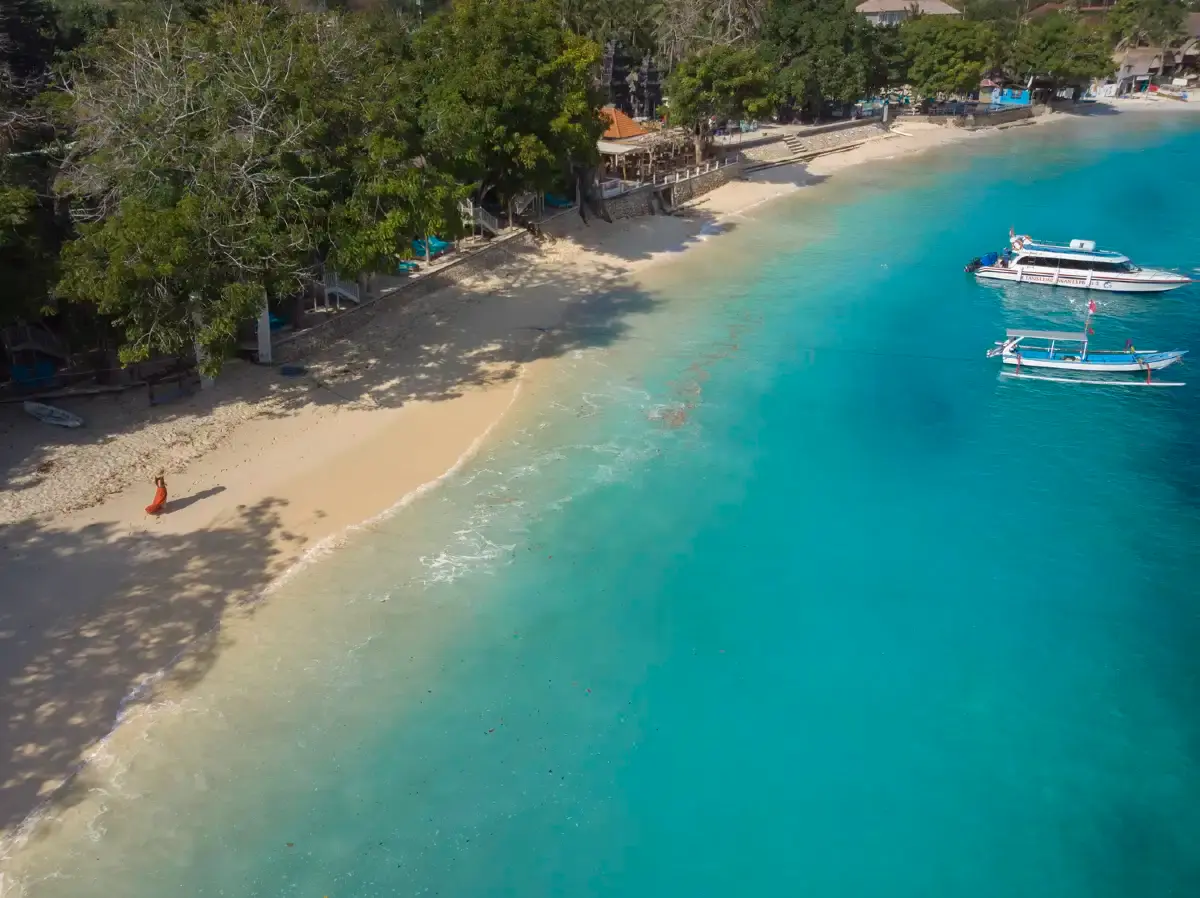
Most visitors meet Nusa Penida’s underwater world on a long, bumpy boat ride to the far south-west. Yet the island’s most relaxed, most beginner-friendly snorkeling sits just minutes from where the fast boats dock: a sheltered stretch of the north-west coast where coral gardens run up into shallow water, turtles cruise in to graze, and the sea stays calm long after the south coast has turned rough. This is the Gamat Bay and Toyapakeh reef run — and it is where our team swims on days off.
We are the Penida Island Team, local guides based on the island. In this guide we break down both spots: what makes Gamat Bay’s small cove special, how the reef off Toyapakeh works, how to get in the water from a boat or from shore, what you are likely to see, when currents become a serious factor, what trips cost, and how to fit it all into one easy day.
📋 Gamat Bay and Toyapakeh at a Glance
| ❓ | ℹ️ Details |
|---|---|
| 📍 Location | North-west coast; Gamat Bay is a small cove between Toyapakeh and Crystal Bay, around 10–15 minutes’ drive from Toyapakeh |
| 🎫 Entry fee | No official ticket for the water; shore visitors are sometimes asked for a small parking fee (around IDR 5,000–10,000); boat tours cost more — see costs below |
| ⏰ Best time | Early morning for the clearest, calmest water; the dry season (April–October) is the most reliable |
| ⏳ Time needed | Half a day from the island, or a full day if you join a multi-stop open trip |
| 🥾 Difficulty | Easy swimming but real ocean awareness required — currents can pick up; shore entry is down steep stairs |
| 🍽️ Facilities | Toyapakeh town has warungs and ATMs; facilities at the coves themselves are minimal |
🐢 What makes Gamat Bay special
Gamat Bay is a narrow, postcard-sized cove folded into the coast between Toyapakeh and Crystal Bay. What you cannot see from the sand is the reason snorkelers love it: the bay floor is a shallow coral plateau that begins just a few fin kicks from shore, then the seabed drops away down a wall to around 40 metres. That combination — sunlit shallows with deep water close by — concentrates marine life into a small, easy-to-explore area.
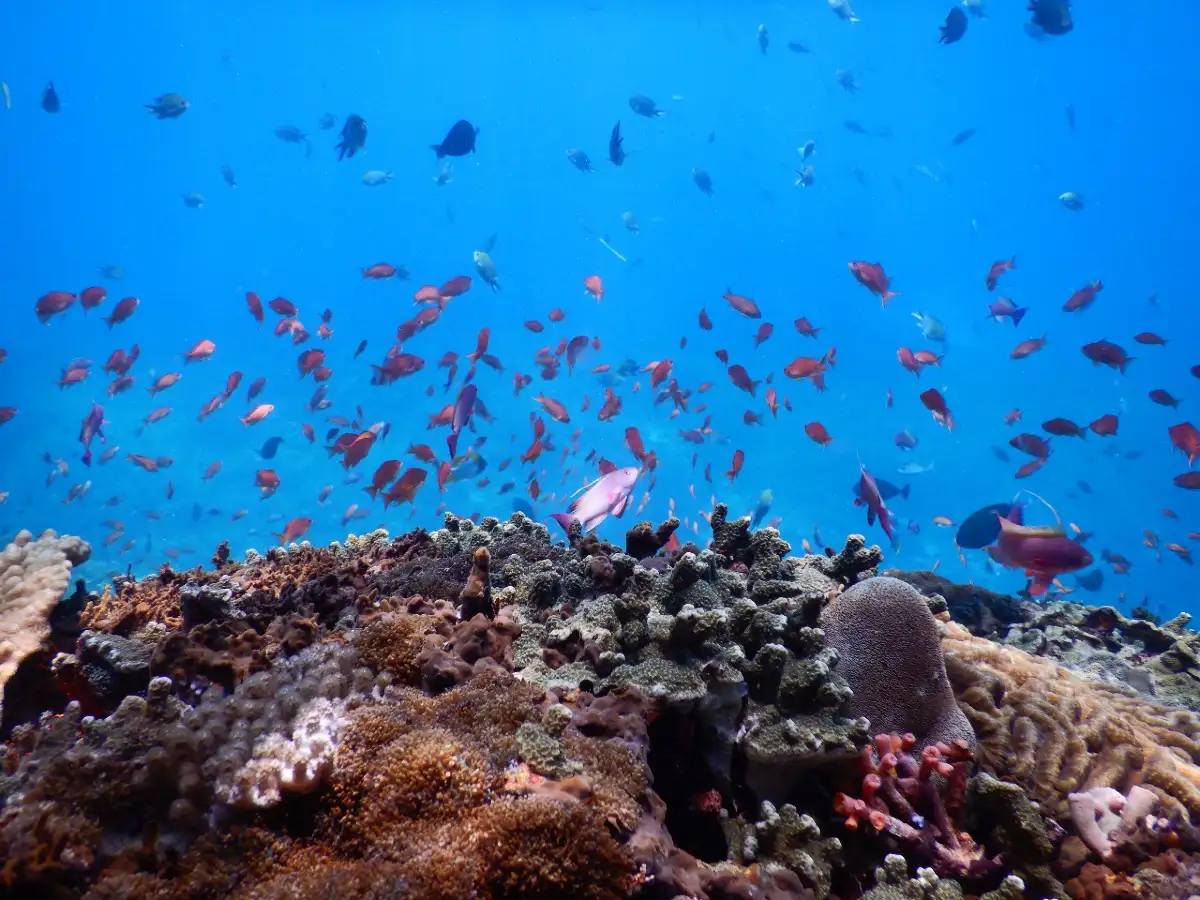
The plateau itself is a busy neighbourhood: hard corals in table and branching shapes, soft corals moving with the swell, clouds of small reef fish hovering above it all, and the headline act — turtles that glide in to graze over the shallow ground, often tolerating patient, quiet snorkelers floating a few metres above. Because the plateau is so shallow, everything happens within sight of the surface, which makes it perfect for photos and for nervous first-timers.
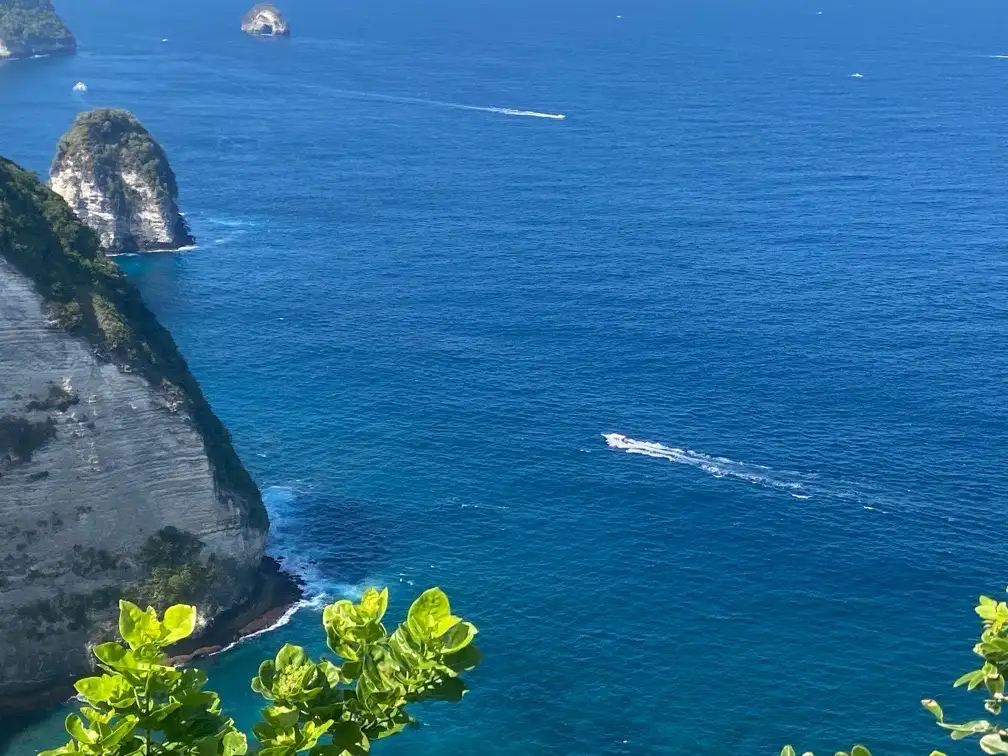
The north-west coast as a whole is sheltered from the big southern swell that batters the rest of the island, so the water here is usually clear, warm and settled. That is why we steer families, casual snorkelers and anyone recovering from a manta-trip soak here — Gamat rewards slow swimming, not heroics.
🗺️ Where they are and how to get in the water
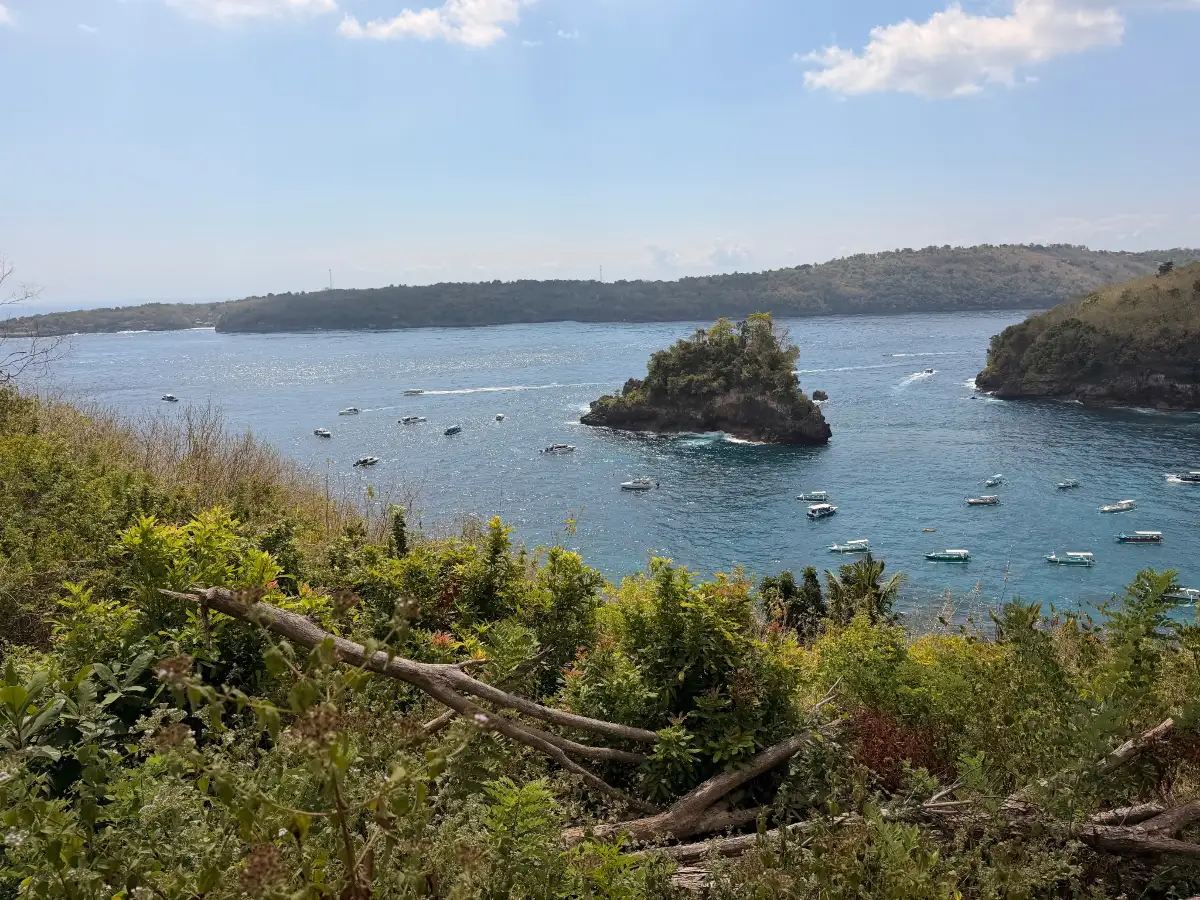
Toyapakeh is the island’s port town on the north-west coast, and Banah Nyuh Harbour is where most fast boats from Bali arrive. The Sanur crossing takes around 30–45 minutes and costs roughly IDR 150,000–250,000 (≈ US$9–15) one way, with around 17–20 departures a day between roughly 07:00 and 17:00. Foreign visitors should also sort the official Bali tourism levy of IDR 150,000 — paid once per trip, cashless, via the Love Bali portal.
From Toyapakeh, Gamat Bay is only around 10–15 minutes by scooter or car on the coast road towards Crystal Bay. Once there, you have two very different ways to get in the water:
- 🛶 By boat (the easy way). Most shared “open trip” snorkeling tours — four to five stops in a day — include Gamat Bay and/or the reefs off Toyapakeh, with masks, fins, life jackets and a guide on board. The boat anchors in the cove and you slide straight in over the plateau.
- 🪜 From shore (the DIY way). Gamat is one of the few quality snorkel spots with road access: a lane drops to the cove, then steep stairs carry you down to a small strip of sand. Enter from the sandy patch, swim out to the coral, and pick a calm morning — the stairs are slippery and the entry is unprotected when swell runs.
The famous Toyapakeh coral wall off the harbour point is a step up in ambition. It is a classic drift-dive site, meaning the current — not you — does the moving, and it is best sampled from a boat with a crew who know the tide windows. Confident snorkelers can float its upper edge on calm days; everyone else will get plenty out of the shallows near the harbour and at Gamat. One bonus of basing yourself in Toyapakeh: if you sleep on the island rather than day-tripping, you can be at the cove before the first tour boats have even left the harbour.
🤿 What you will see down there
The reefs along this stretch of coast are among the healthiest around Bali, and the fish life reflects it: layered gardens of hard and soft coral, clouds of small reef fish rising off the plateau, and turtles cruising between the coral heads. Visibility is often excellent on morning tides, and because the action happens in shallow water, even a first-time snorkeler sees plenty without swimming anywhere deep.
The seasonal wildcard is the mola mola (ocean sunfish), the strange, moon-faced giant that rises from deep water in the colder months. The season runs roughly July to October, and sightings are mainly a diver experience at deeper sites such as nearby Crystal Bay — but snorkelers around Gamat and the Toyapakeh wall do get occasional surprise fly-pasts in that window. Treat any sighting as a bonus, never a plan.
Please snorkel like a guest: float above the coral rather than over it, never stand on or touch the reef, keep your fins clear, and give turtles room to breathe at the surface. Coral grows at a glacial pace — a single careless fin kick can undo decades of it.
💨 Currents and safety
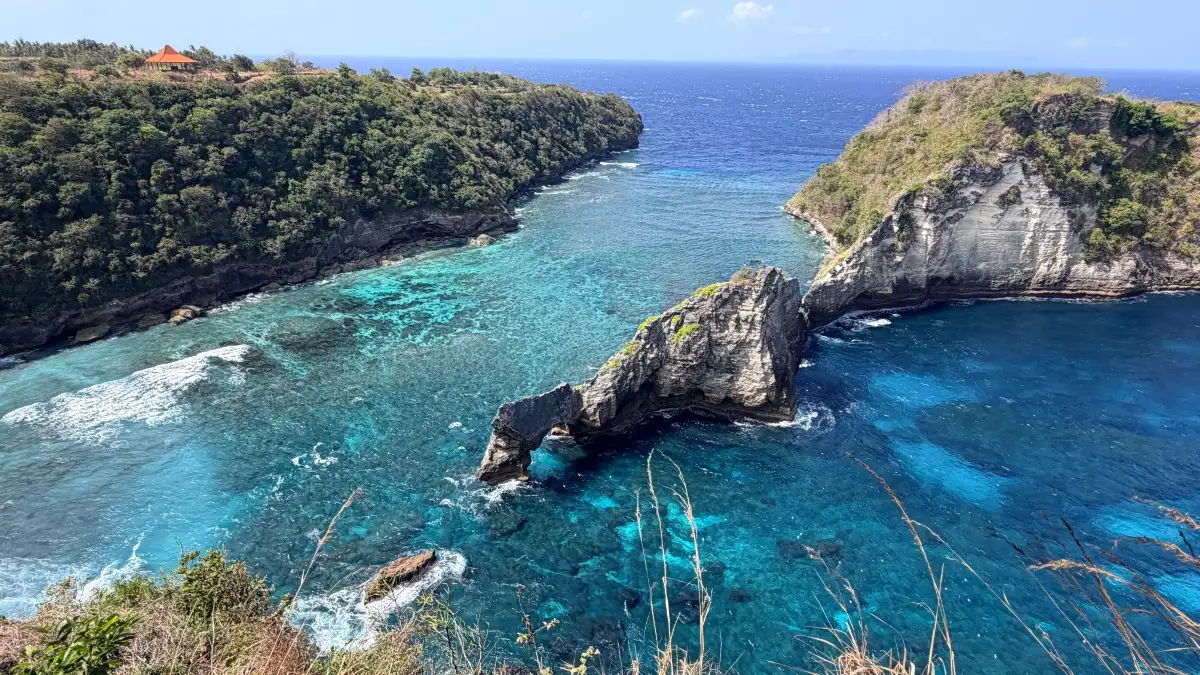
The north-west is the calm side of Nusa Penida, but calm is relative. The same deep channel between Penida and Bali that keeps this coast clear also moves enormous volumes of water twice a day, and the current can pick up quickly — especially around the change of tide, at Gamat’s open mouth and along the Toyapakeh point where the wall begins.
A few habits keep you safe. Snorkel with a buddy or a boat, never alone. Stay close to your entry point until you know how the water is moving. Glance at the boats or the reef every minute or so — if the scenery is sliding past, you are drifting and should angle back or signal. Wear the life jacket the boat offers even if you are a strong swimmer, and save your energy: most trouble starts with someone simply running out of puff a little too far from the ladder.
⚠️ Safety first: If you find yourself drifting away from the cove, do not swim against the current — you will lose that race and your energy with it. Stay calm, float, and signal the boat or your buddy immediately. Skip shore snorkeling entirely on days when whitecaps are showing offshore or swell is wrapping into the cove.
⏰ The best time of day
Water clarity on this coast follows the sun. Early morning brings the flattest sea, the softest light and the best visibility, because the daily wind has not yet picked up and the tour boats have not yet anchored over the shallows. By early afternoon the surface chop dulls the view; by late afternoon the wind has usually had the final word entirely.
Practically, that means shore snorkelers should be in the water before mid-morning — ideally within a couple of hours of sunrise — while boat snorkelers should book the earliest departure their operator runs. Midday still works fine for a swim, but expect boats moored over the best coral and a busier, shallower-feeling reef; the fish do not leave, they just get harder to see through the chop.
Season matters too: April to October is the dry, calm, high-visibility stretch, while November to March brings short, intense downpours and choppier seas, and the water can stay stirred up for a day after heavy rain. If your dates land in the wet season, keep your snorkeling plans flexible and simply move them to whichever morning looks flattest — on this coast, patience is usually rewarded within a day or two.
💵 What it costs
The DIY route is delightfully cheap. The water itself is free; if you ride a scooter to the cove, a small parking fee of around IDR 5,000–10,000 is sometimes collected, and scooter rental runs about IDR 75,000–100,000 per day (≈ US$5–6). If you need to rent a mask and fins, check the fit before you pay — a leaking mask ruins a good reef faster than any current.
Boat trips are the mainstream option. A shared “open trip” visiting four to five spots costs roughly IDR 300,000–500,000 per person (≈ US$19–31), with manta-focused itineraries at the top of that range. A private boat runs about IDR 1.5–3 million for the whole boat (≈ US$95–190), which a group of four to six can split — and it lets you set your own route and pace. Full-day packages starting from Bali cost more because they bundle in the crossing. Most operators include gear, life jackets and a guide; confirm all three before you pay, and confirm your trip actually stops at Gamat Bay rather than only the manta sites.
Fees, schedules and conditions change frequently on Nusa Penida — treat every price here as an indication and double-check locally on the day.
💡 Local tip: In July–August and around Indonesian holidays, book your boat a day ahead and push for the morning slot — the first boats get the calmest water at Gamat and the emptiest reef at Toyapakeh. Even if the early trip costs a little more, afternoon chop can cancel the best part of the day.
👨👩👧👦 Pairing with Crystal Bay and the manta trips
Geographically, this is the easiest corner of the island to build a day around. Crystal Bay — the west coast’s calmest swimming beach and its favourite sunset spot — is around 25–30 minutes from Toyapakeh and asks only a small entry fee of around IDR 25,000 (≈ US$1.50). A classic north-west day: shore snorkel at Gamat in the early morning, lunch at a warung in Toyapakeh, an afternoon at Crystal Bay, then stay for the sunset the bay is famous for — our Crystal Bay guide has the full rundown.
If mantas are on your list, the same harbours launch those trips: Manta Point lies 45–60 minutes away by boat on the south-west coast, and sightings are possible year-round. Mantas are wild, vulnerable animals, so choose operators who follow the rules — keep 3–4 metres away, never touch or chase, enter the water quietly. The Manta Trust publishes excellent guidance on respectful encounters, and our Manta Point snorkeling guide explains exactly how the trip works day to day.
❓ Frequently Asked Questions
Can you snorkel Gamat Bay from shore?
Yes — Gamat is one of the few top snorkel spots on Nusa Penida with road access. A lane leads down to the cove and steep stairs drop to a small sand strip; from there you swim out to the shallow coral plateau. Pick a calm early morning, take care on the slippery stairs, and head back in before the wind builds. In swell, or if you are unsure, go by boat instead — it is the easier and safer entry by far.
Will I see turtles at Gamat Bay?
Very often, yes — turtles regularly cruise in to graze over the shallow plateau, and the morning hours give you the best chance. They are wild animals, so sightings are never guaranteed. Give them space: never touch, chase or block their path to the surface, and let them come to you. Relaxed, quiet snorkelers floating still at a respectful distance usually get the better encounter anyway.
Is Gamat Bay beginner-friendly?
With simple precautions, yes. The shallow plateau puts coral and fish within easy view of the surface, boats provide life jackets and guides, and the north-west coast is the island’s calmest. Two things deserve respect: the current, which can pick up quickly, and the steep, slippery shore stairs if you skip the boat. Non-swimmers and young children should stay in life jackets close to the boat or on the sand.
How much does snorkeling here cost?
Shore snorkeling is free apart from transport and occasional small parking fees of around IDR 5,000–10,000. Shared open trips covering four to five spots run roughly IDR 300,000–500,000 per person, with manta itineraries at the top of the range; a private boat costs about IDR 1.5–3 million to charter, split across your group. Prices move with the season — confirm current rates locally before you commit.
Toyapakeh or Gamat Bay — which should I do first?
Start with Gamat Bay in the morning: its shallow plateau is the friendliest introduction, and the water is clearest early. Move to the Toyapakeh wall and the reefs off the point once you are warm and confident — the deeper water and stronger drift make it the more advanced of the two. Most boat tours bundle both into a single morning anyway, which is honestly the easiest way to get the best of each.
🏁 Final thoughts
You do not need a long, bumpy boat ride to meet Nusa Penida’s underwater world. A few fin kicks from a quiet cove between Toyapakeh and Crystal Bay, the reef is already doing its thing — turtles grazing, clouds of fish, coral in better shape than most of Bali. Go early, respect the current, give the turtles their space, and the north-west coast will handle the rest.
If this guide helped, the reads below slot straight into the same day — Crystal Bay for sunset, Manta Point for the big wings, and the east coast coves if you have a spare day. See you in the water.
🔗 Related Nusa Penida Guides
- 🏖️ Crystal Bay, Nusa Penida — calm swimming, shore snorkeling and the island’s best sunset.
- 🤿 Swimming with Manta Rays at Manta Point — prices, season and the ethical code of conduct.
- 💎 Diamond Beach & Atuh Beach — the east coast’s twin coves for your spare day.