
✍️ By the Penida Island Team — local guides based on Nusa Penida · 🗓️ Last updated: November 2026 · ⏱️ ~11 min read
Angel’s Billabong is the spot on Nusa Penida where the rock itself becomes a swimming pool: a set of smooth limestone terraces on the southwest coast that fill with clear green water at high tide and hold it, glassy and warm, when the tide drops. At its best — low tide on a flat, calm morning — it looks like an infinity pool built for giants, with the open ocean foaming just beyond the edge.
It is also, in the wrong conditions, one of the most dangerous places on the island. People have died here, swept from this same shelf by waves that arrived out of an apparently calm sea. We are the Penida Island Team, local guides, and this is the one attraction where we sometimes tell guests to stay on the path and simply look. This guide explains how the pool formed, exactly when it is safe to enter, what the combined ticket with Broken Beach costs, and how to time your visit around tide, swell and the tour crowds.
📋 Angel’s Billabong at a Glance
| ❓ | ℹ️ Details |
|---|---|
| 📍 Location | Near Sakti village, southwest coast; around 200 m from Broken Beach |
| 🎫 Entry fee | Combined ticket with Broken Beach — around IDR 25,000 per adult (≈ US$1.50), around IDR 15,000 per child aged 4–13 (≈ US$1) |
| ⏰ Best time | Low tide with a flat, calm sea — ideally the morning low tide |
| ⏳ Time needed | 30–60 minutes, usually paired with the Broken Beach loop |
| 🥾 Difficulty | Easy walking — but only when the rock shelf is dry and the sea is flat |
| 🍽️ Facilities | Warungs and toilets near the car park by the Broken Beach entrance |
🌊 What is a billabong — and how the pool formed
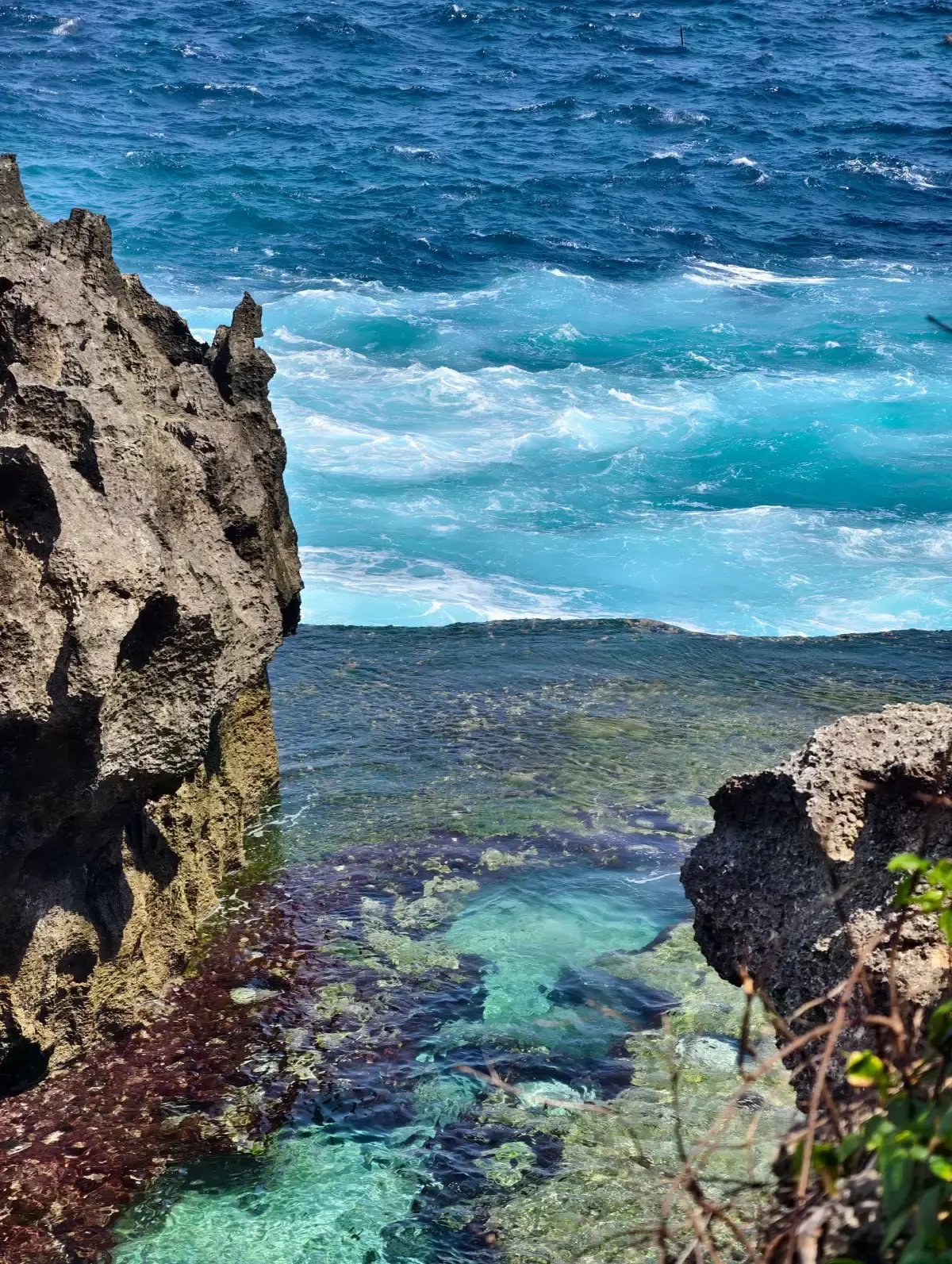
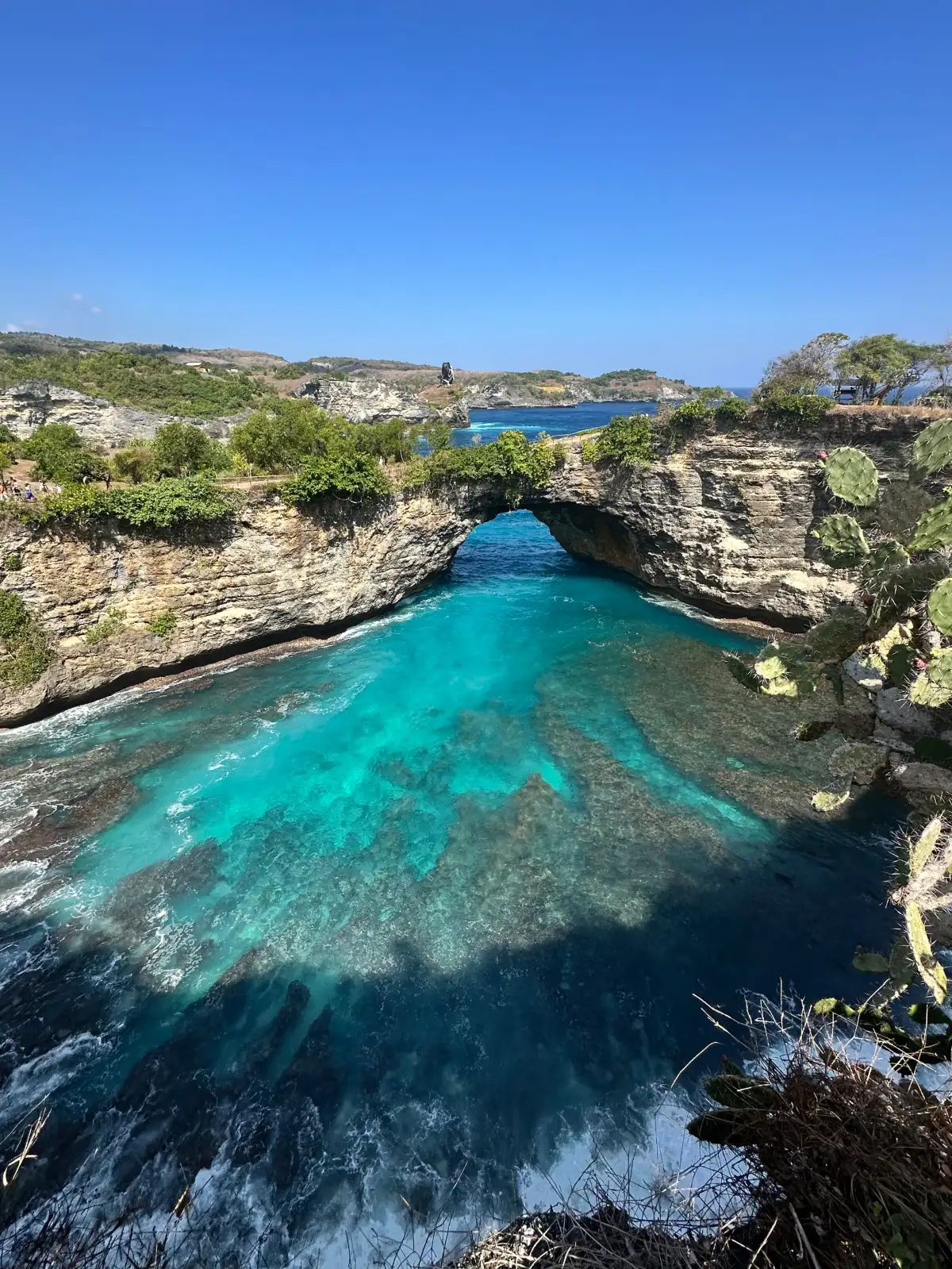
A billabong is an Australian-English word for a pool of water cut off from a river, and the name fits this place better than you might expect: the pool sits right beside the sea but is renewed by it only when the tide pushes in. Over thousands of years, rain and waves have dissolved and sculpted the island’s uplifted limestone shelf into smooth basins and terraces. At high tide the ocean floods straight across the shelf; at low tide the water settles into the deepest bowl, leaving a shallow emerald pool that spills gently over a natural rock lip towards the surf line.
Look around and you can read the process everywhere: scalloped hollows, polished channels, smaller pools strung along the shelf like a chain of bathtubs. Tiny fish and crabs shelter in them at low tide. It is a fragile, living sculpture, polished a little further every year — which is one more reason the safety rules here matter so much.
The pool also changes character through the day. On a dropping tide it drains gently and the colour deepens; at the bottom of the tide it is at its calmest and shallowest; as the tide turns, the ocean starts pushing water back over the lip, and within a couple of hours the whole shelf can be flooded, with waves breaking where you had been sitting. That cycle is the entire safety story of this place — the sea takes the pool back without asking anyone’s permission.
🗺️ Getting there and the combined ticket
Angel’s Billabong sits near Sakti village on the southwest coast, around an hour to an hour and a quarter from the Banah Nyuh and Toyapakeh harbours. The last stretch of road is narrow and potholed, so take it slowly. Scooter rental runs around IDR 75,000–100,000 per day for confident riders; a private car and driver costs around IDR 600,000–900,000 per day and remains the comfortable way to cover the whole west loop without arriving exhausted. Coming straight from Bali, take an early boat — the Sanur crossings begin around 07:00 — so the long drive out west happens in the cool hours rather than the hot ones.
🎟️ Tickets: the billabong shares one ticket with Broken Beach, its next-door neighbour: around IDR 25,000 per adult (≈ US$1.50) and around IDR 15,000 per child aged 4–13 (≈ US$1). One purchase covers both sites. Fees, schedules and conditions change frequently on Nusa Penida — treat every price here as an indication and double-check locally on the day.
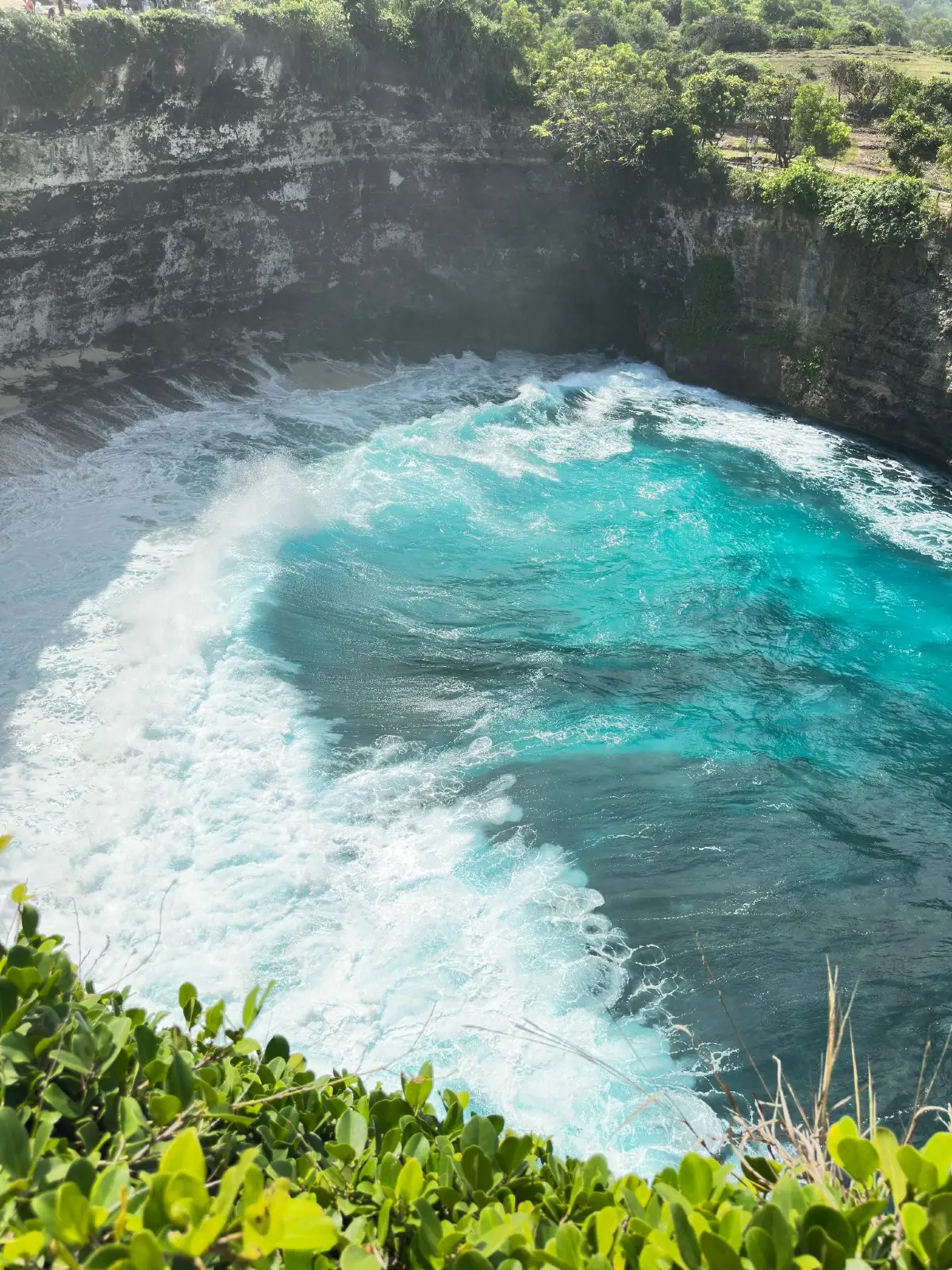
The pairing could not be more convenient: the two attractions are only around 200 metres apart, joined by a sandy path, so most visitors park once and walk between them. The geology makes a perfect double act — read how the great cliff circle next door formed in our Broken Beach guide, and see where the west coast fits into a full island plan in our best things to do in Nusa Penida guide.
⏰ When it is safe: tide and swell explained
Everything at Angel’s Billabong depends on two dials: tide and swell. The rule we teach is simple — the pool is safe to enter only at low tide, with a flat, calm sea. There are two low tides a day at shifting hours, so check the day’s times the night before: any tide app works, or ask your driver or a warung owner, because everyone on this coast watches the water for a living.
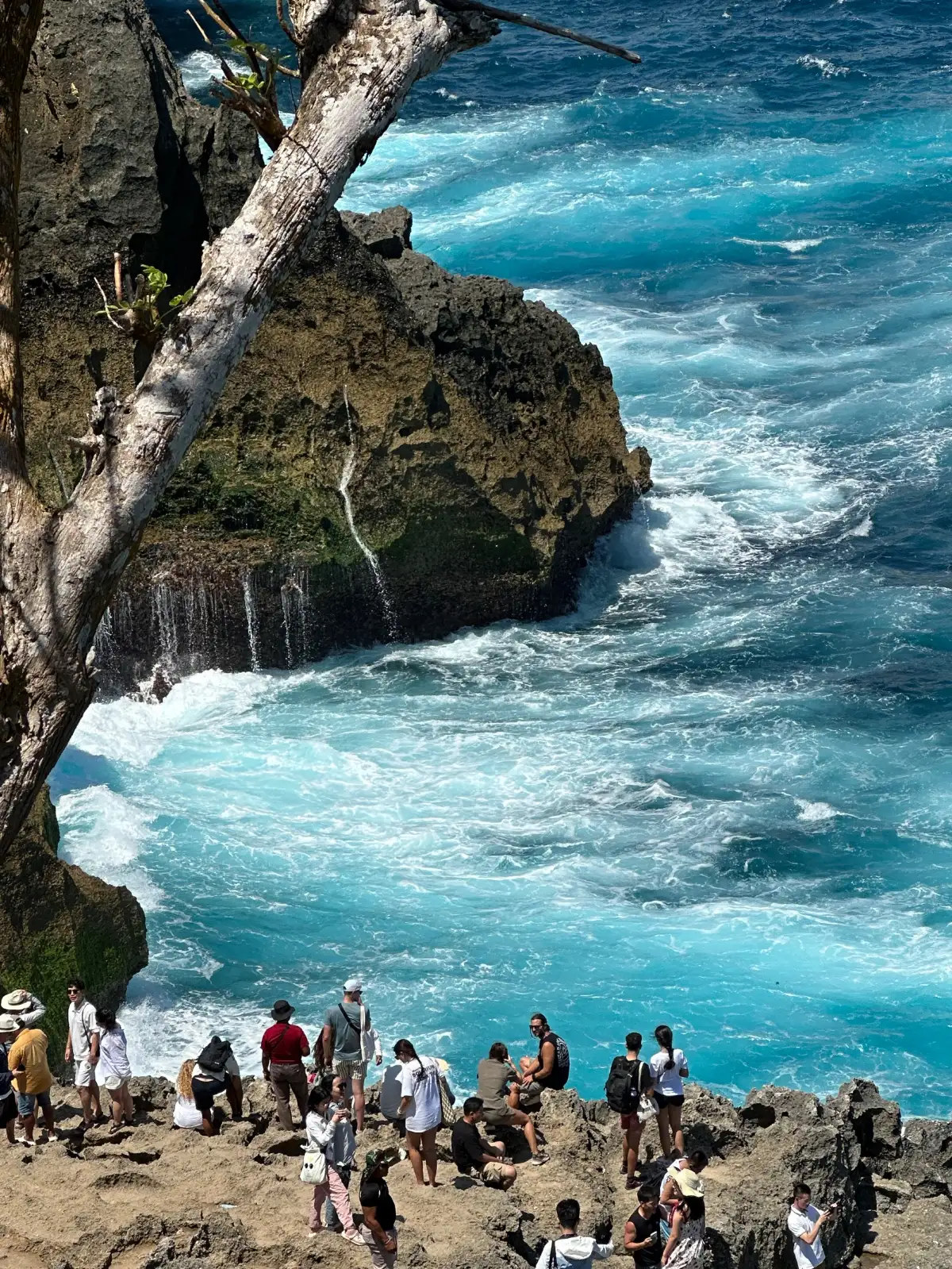
Swell is the killer, and we choose that word deliberately. Southern-ocean swells arrive in sets, often minutes apart, and waves that look small from the cliff can push white water right across the shelf where you are standing. Wet rock above the waterline is the tell-tale sign: if spray is already reaching where you want to sit, the sea is claiming that ground, and it will not negotiate.
Season helps too. From April to October the sea along this coast is usually at its flattest and safe windows are common; from November to March, swell and rain arrive more often and the billabong spends long stretches as a look-don’t-touch sight. Locals read the water the simple way: watch the horizon for the sets, count how many waves roll through before a pause, and check whether white water is washing over the outer lip. If it is, the decision makes itself.
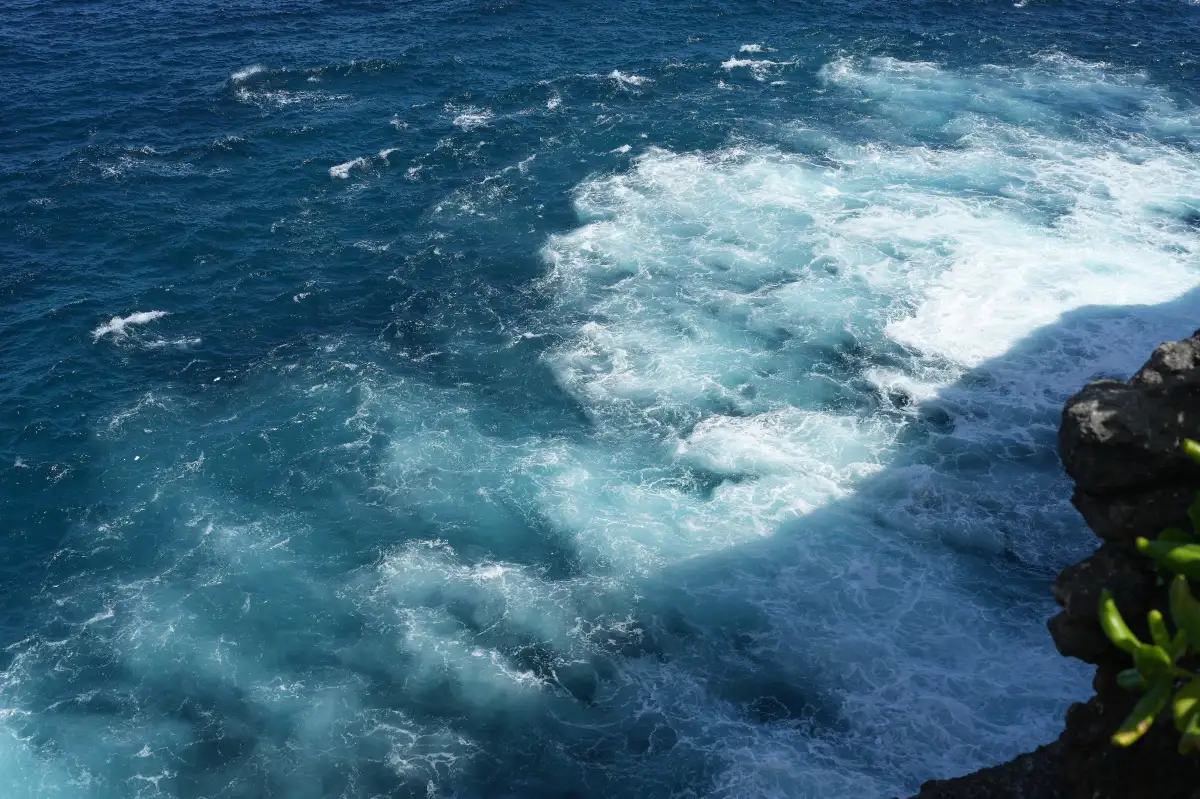
⚠️ Safety first: several people have lost their lives at Angel’s Billabong after being swept off the shelf by waves on seemingly calm days. Never enter at high tide, never when swell is running, never on wet rocks — and never turn your back on the ocean. If there is any doubt, stay on the path and enjoy the view; the pool will still be here tomorrow.
Our go / no-go checklist for guests:
- ✅ Go: low tide, flat horizon, dry rocks, no white water crossing the shelf.
- ✅ Watch the sea for a few minutes from the path before you descend to the pool.
- ✅ Step in slowly — the rock under the waterline is slick with algae.
- ✅ Keep children within arm’s reach the entire time.
- ❌ No-go: high or rising tide, breaking waves on the horizon, wet rock, wind swinging onshore.
- ❌ Never pose for photos at the seaward edge or turn your back on the water.
- ❌ Never swim out over the rock lip towards the open sea — the currents beyond the shelf are strong and cold.
💡 Local tip: the night before, screenshot the day’s tide chart and the swell forecast — mobile signal is patchy on the southwest coast, and the one question that matters here (‘is it low and flat?’) is best answered over breakfast, not from the cliff path.
📸 What it looks like at its best
Hit the right window and you understand the name instantly. The main pool turns glassy and bright green, small fish gather in the shallows, and the terraces glow pale gold in the morning light. Bring a waterproof camera if you have one — photos taken from inside the pool, with water spilling over the lip behind you, are the ones people end up framing.
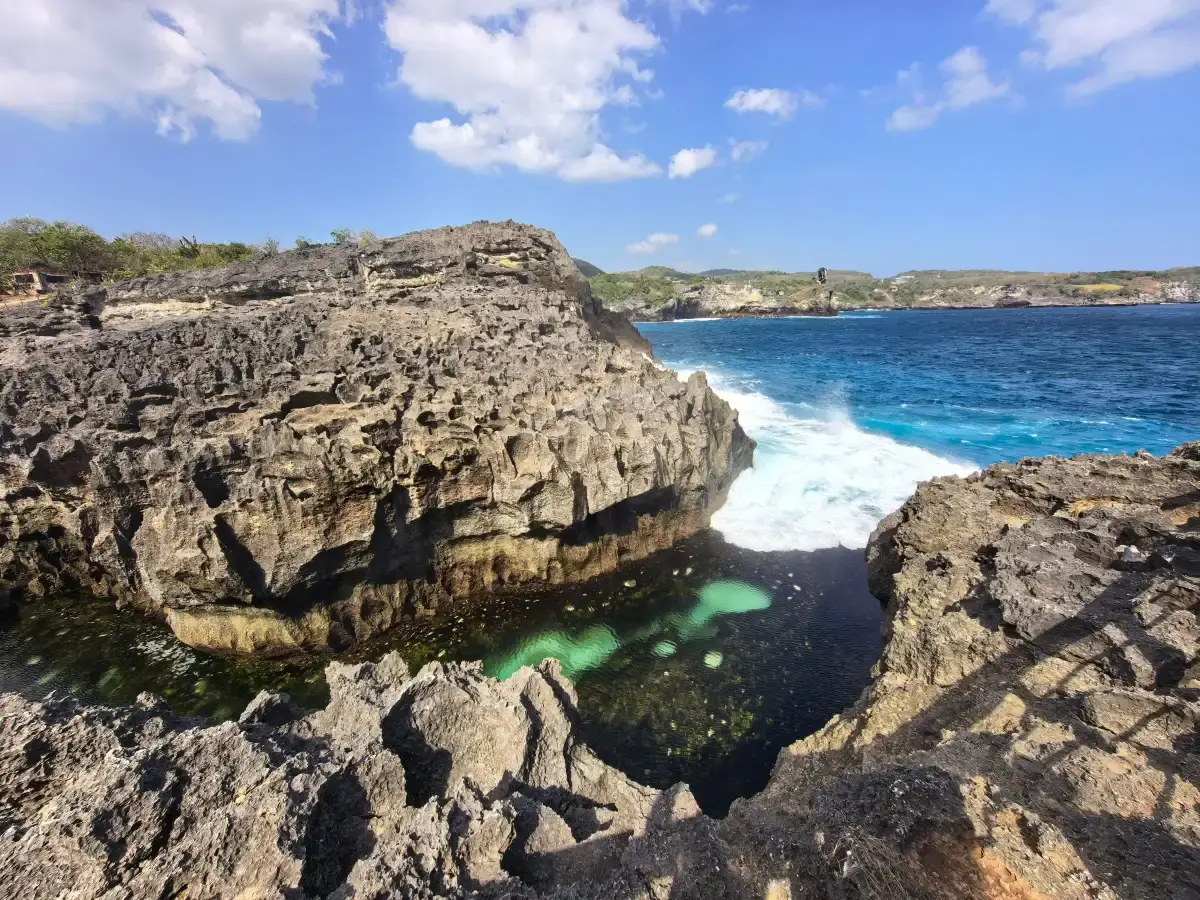
Half the fun is exploring the smaller pools along the shelf: warm, waist-deep basins where you can sit with the ocean working away nearby — from a respectful distance, always. The water in the pools is sea water, refreshed with every high tide; there is no freshwater up here, so rinse-off expectations should stay realistic. Sunscreen or no sunscreen, you will leave slightly saltier than you arrived.
👥 Crowds and best times of day
The tour waves from Bali and the harbour arrive from mid-morning, and on a safe low-tide day the pool can hold a cheerful, splashing crowd by 11:00. Come for the first low tide of the day — often early morning — and you may share the whole shelf with a handful of travellers and a lot of hermit crabs. Late afternoon is the second window, if tide and swell allow; the low sun sets the wet rock glowing.
There is one more reason to come early: you get to judge the safety conditions with your own eyes instead of inheriting someone else’s optimism. If you arrive and the sea looks wrong, walk the Broken Beach loop first and circle back in an hour or two. The tide waits for nobody — but it does always come back.
Dry-season weekends and Indonesian public holidays are the busiest times, and the car park fills with tour buses from late morning. If you are travelling with children or older relatives, the early low tide is doubly worth it: cooler rock underfoot, fewer people to dodge on the uneven shelf, and enough quiet to hear the waves instead of the tour group behind you.
🍽️ Facilities nearby
Facilities cluster at the Broken Beach entrance and car park, a few steps away: warungs serving drinks, instant noodles and fried rice, simple toilets for a small charge, and stalls renting hats and sarongs. There is nothing at the rock shelf itself — no shade worth the name, no lifeguard, ever — so carry your own water, sun protection and cash in small notes. Plan a half-day here: the billabong itself is quick, but the Broken Beach loop, lunch and a second visit at a better tide fill the hours nicely. If the tide and swell look kind, pack a change of clothes and a towel — you will want both after a proper soak — and a dry bag for your phone; the rock is abrasive and the spray is real even on calm days.
👨👩👧👦 Pairing Angel’s Billabong with the west loop
The billabong anchors the western half of the classic west loop together with Kelingking and Crystal Bay, and the shape of your day should follow the tide. If low tide falls in the morning, start here and at Broken Beach, then drive to Kelingking for the afternoon light. If low tide is around midday, run the loop the other way and let your driver set the order — good drivers on this island all carry the tide times in their heads.
- 🦖 07:00 — Kelingking viewpoint while the platform is quiet.
- 🕳️ 10:30 — the Broken Beach clifftop loop (30–45 minutes).
- 🌊 11:30 — Angel’s Billabong at low tide; paddle only if every safety box is ticked.
- 🌅 16:30 — swim and sunset at Crystal Bay, around 25–30 minutes away.
A shared west day tour from Bali — boat plus car, around IDR 450,000–600,000 per person — covers the same ground if you would rather not organise transport on the island. Just check that the operator allows real time at each stop rather than racing the sunset; the billabong in particular rewards patience over schedules.
❓ Frequently Asked Questions
Can you swim in Angel’s Billabong?
You can wade, sit and paddle in the pool itself when the tide is low and the sea is calm — thousands of visitors do it safely every year. What you must never do is swim out over the rock lip towards the open ocean, where the currents are strong. The pool is a wading experience, not a swimming one, and only in the right conditions.
When is Angel’s Billabong safe?
Only at low tide with a flat, calm sea and dry rock. Check the day’s tide times in advance, watch the water for a few minutes before you descend, and treat wet rock above the waterline as the sea’s warning label. If swell is running or spray is crossing the shelf, do not go down — view it from the path instead.
How much are the tickets?
Angel’s Billabong shares one ticket with Broken Beach: around IDR 25,000 per adult (≈ US$1.50) and around IDR 15,000 per child aged 4–13 (≈ US$1). Prices have shifted more than once in recent seasons, so a small buffer in your budget is wise.
How close is Broken Beach to Angel’s Billabong?
Very close — the two sites are around 200 metres apart, joined by a sandy path, and one combined ticket covers both. Most visitors park once, walk the Broken Beach clifftop loop (30–45 minutes), then drop down to the billabong if tide and swell allow. It is the easiest two-for-one on Nusa Penida.
What is the best time of day to visit?
The morning of a low tide, ideally the first low tide of the day. You get the pool glassy and uncrowded, cooler air and the best photo light. Midday brings tour crowds and harsh sun, and by afternoon the tide may have swallowed the pool — though if the sea stays calm, golden hour on the terraces is beautiful from the path.
🏁 Final thoughts
Angel’s Billabong sums up Nusa Penida in a single site: staggeringly beautiful, completely indifferent to your travel plans, and safest for those who read the water before they walk on the rocks. Time it right and it is one of the most memorable half-hours you will spend anywhere in Asia; time it wrong and it is a photo from the path — still spectacular, and the right choice.
Plan the rest of your day with the guides below — and when in doubt about the pool, remember the local rule: look first, enter later, and never let the photo decide for you.
🔗 Related Nusa Penida Guides
- 🕳️ Broken Beach (Pasih Uug) — the collapsed sea cave 200 metres from the billabong, on the same ticket.
- 🦖 Kelingking Beach: The Complete T-Rex Cliff Guide — the headland that anchors the west loop.
- 🏖️ Crystal Bay, Nusa Penida — the west coast’s calmest swimming and its best sunset.