
✍️ By the Penida Island Team — local guides based on Nusa Penida · 🗓️ Last updated: November 2026 · ⏱️ ~12 min read
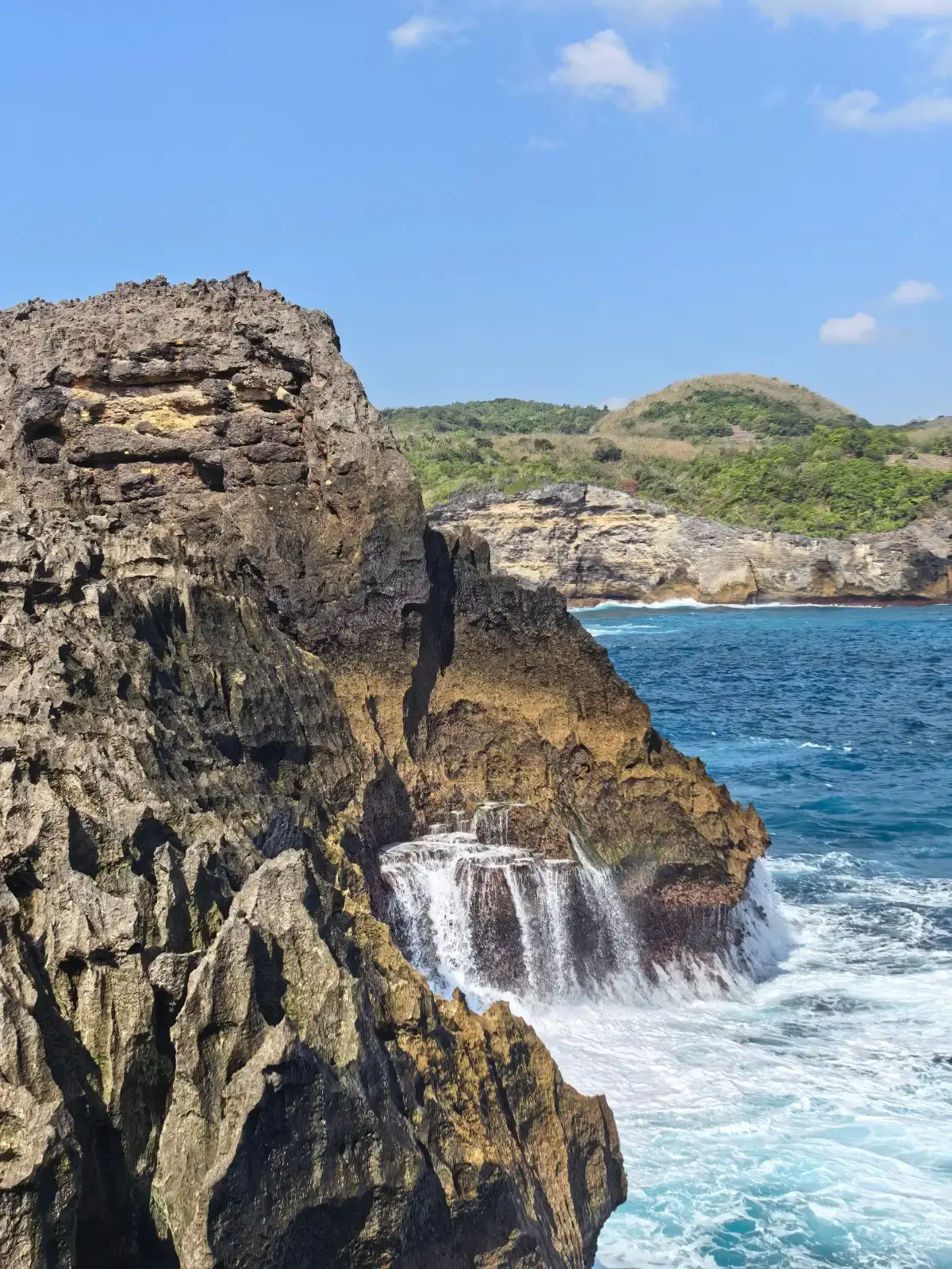
Somewhere on Nusa Penida’s west coast, a thread of white water appears to pour straight off the edge of the island into the sea. That is Seganing Waterfall — a spring-fed ribbon fall dropping from the clifftop into a surge channel below, framed by some of the most photogenic rock coast in Bali. It is also one of the least accessible attractions on the island, reached by a steep cliff path with bamboo ladders, and it only runs properly after rain.
We are the Penida Island Team, and we have a soft spot for Seganing precisely because it demands judgement. You cannot just show up and tick it off; you have to read the sky, the season and the sea. This guide covers all of that honestly: when the fall actually flows, what the bamboo-ladder descent feels like, the tide and swell rules that keep you safe, who this hike is for, and how to pair it with Peguyangan and Crystal Bay.
📋 Seganing at a Glance
The short version first — the facts we check with guests before anyone touches the trailhead.
| ❓ | ℹ️ Details |
|---|---|
| 📍 Location | West coast of Nusa Penida, near the Peguyangan turn-off, around 40 minutes from Toyapakeh. |
| 🎫 Entry fee | No official ticket; small informal parking donations (around IDR 5,000–10,000 ≈ US$0.30–0.60) are common. |
| ⏰ Best time | After rain in the wet season; early morning, with a calm sea. |
| ⏳ Time needed | 1–1.5 hours for the descent, the viewpoint and the climb back. |
| 🥾 Difficulty | Hard — a roughly 20-minute steep descent on a narrow path with bamboo ladders. |
| 🍽️ Facilities | None — no shops, toilets or shade. Bring water and go with company. |
Fees, schedules and conditions change frequently on Nusa Penida — treat every price here as an indication and double-check locally on the day.
💦 When Seganing actually flows
Let us start with the honesty section, because Seganing is the most seasonal attraction on Nusa Penida. The fall is fed by spring water, not by a river, and the flow that reaches the cliff edge varies enormously. After a stretch of rain — most likely in the wet season from November to March — the spring runs full and the water pours off the rock in a satisfying white ribbon. Deep into the dry season, the same fall can dwindle to a damp streak, or disappear into the rock altogether.
So if the waterfall itself is the reason for your trip, plan around the rain. Watch the island’s weather for a few days before you go: a good downpour or two, followed by a dry morning, is the ideal combination — full flow in the fall, solid footing on the trail. In the height of the dry season, manage your expectations accordingly.
That said, do not write Seganing off when the water is thin. The setting survives the seasons: a narrow rocky point, the deep blue channel below, waves grinding through clefts in the limestone, and the sense that you are standing at the very edge of the map. Many visitors come for a waterfall and remember the coast instead.
One more expectation to set: Seganing is not a thundering giant even at its best. Its beauty is the improbable line of water leaving the cliff edge and falling free towards the sea, against a backdrop of rock and swell. Photographers love it for that line; everybody else loves the drama of the descent.
🗺️ Getting there and the bamboo-ladder descent
Seganing sits on the west coast, near the turn-off for Peguyangan, around 40 minutes from Toyapakeh by scooter or car. The final roads are narrow and patched, the parking is informal, and the trailhead is not always clearly signposted — ask your driver or the locals at the parking spot to point you to the path. The trail is common knowledge on the island even when it is invisible on your map app.
The descent takes around 20 minutes and is the most adventurous short walk on Nusa Penida. It follows a narrow dirt-and-rock path along the cliff, steepening into sections where bamboo ladders and simple handrails are fixed to the rock. The footing alternates between packed earth, smooth stone and natural steps; the exposure is real, with the sea visible through gaps in the bushes below you. None of it is technical climbing, but all of it demands attention.
Go in dry conditions only. After rain, the earth sections turn to slick clay and the bamboo rungs glass over; if the trailhead is muddy, the ladders will be worse. Wear shoes with grip, keep three points of contact on the ladders, and give each other space — the path is single-file for most of its length. Anyone waiting at a narrow section should step into a wider spot and let the other person pass.
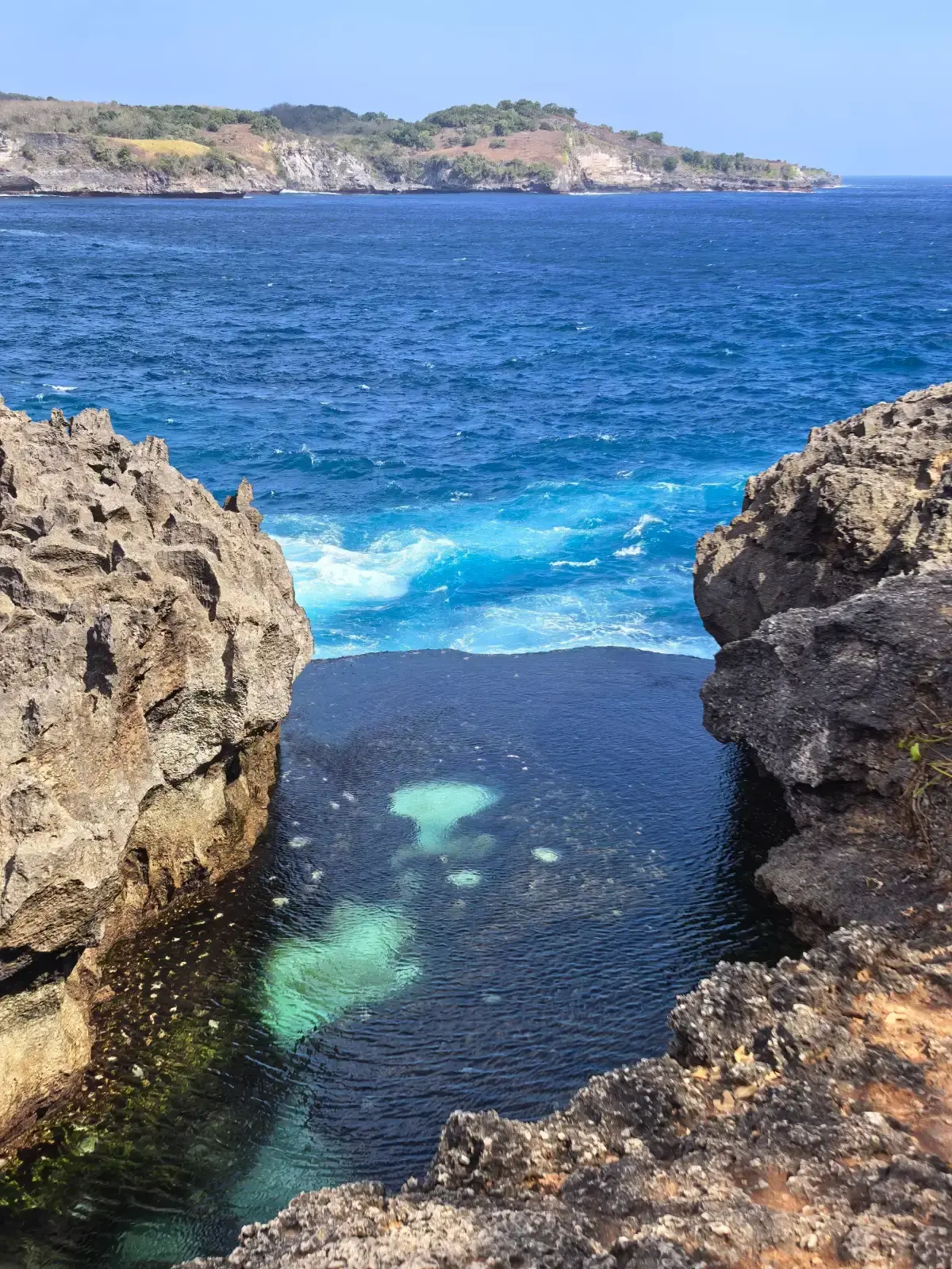
Near the bottom the path opens onto smooth rock shelves above the channel. This is the viewpoint zone. Find a dry, flat patch well back from the edge, sit down, and take in the scene: the fall spilling off the cliff, the channel boiling and calming in rhythm, the cliffs marching away north. Do not be tempted to edge closer to the water line — the next section explains why.
⚠️ Tide and swell safety
This is the most important section of the guide. The ocean at Seganing is not a backdrop; it is an active participant. The surge channel below the fall funnels every swell into a narrow gap, and the water that seems to be retreating is often gathering for the next push. Rocks that look safely dry can be soaked by a single large set, and the rock surface here is smooth limestone worn by exactly that process.
⚠️ Safety first: Never attempt Seganing in big swell. If waves are surging up the channel or throwing spray onto the rocks, stay at the top — no photograph is worth the risk. Before choosing your viewpoint, watch the water for 10–15 minutes, keep well back from the edge, and never turn your back on the sea. Do not swim in the channel under any circumstances, and keep children on the clifftop, not on the rock shelves.
Tide matters too. At mid-to-low tide more of the rock shelf shows, the channel reads clearly, and the viewpoint feels generous. At high tide, especially combined with any swell, the water pushes deeper into the clefts and your margin for error shrinks. Check a tide app and a simple swell forecast before you leave your guesthouse — ten minutes of checking beats an afternoon of regret.
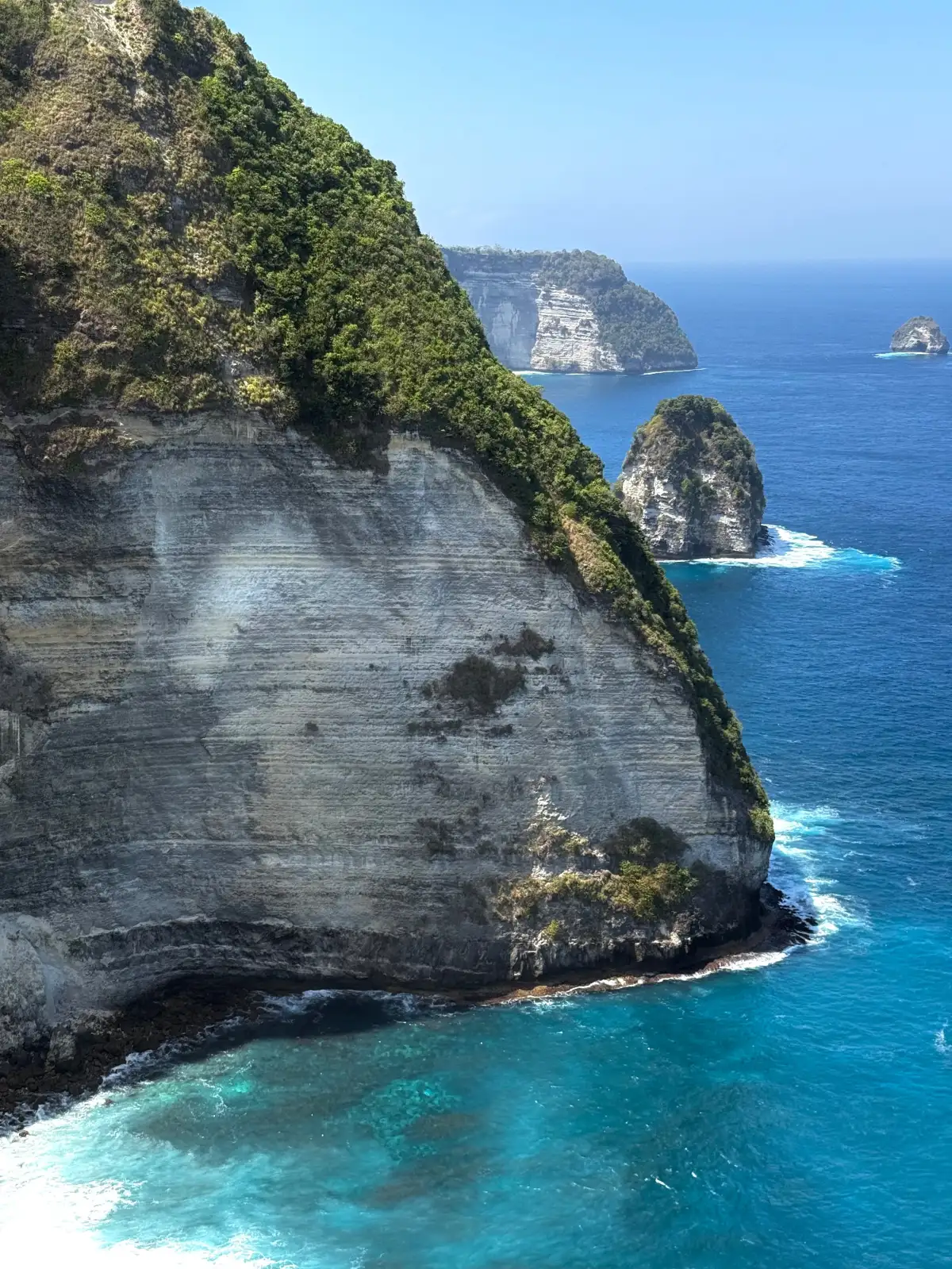
The same ocean that makes Seganing dramatic makes its neighbours dangerous in different ways, so carry the caution with you. The cliffs around this coast crumble quietly, the channels surge without rhythm you can trust, and help on the west coast is a long way away. The best Seganing visits, in our experience, are the boring, safe ones — with all the drama happening safely out at sea.

🥾 Who this hike is for
Among the three south-west cliff walks — the steel stairs of Peguyangan, the forest steps of Temeling and this one — Seganing is the shortest and, for most people, the most adventurous. There is no long staircase to endure, but the exposure arrives sooner, the path is rougher, and the bamboo ladders require a basic comfort with heights and handholds.
You will be fine if you are sure-footed, reasonably fit and comfortable on exposed paths. You should skip it if you suffer from vertigo, have knee or ankle problems, are carrying a child too small to climb ladders independently, or if it has rained within the last few hours. This is also not the hike for a spontaneous after-lunch detour in the wet season — the trail needs a dry window and daylight on your side.
Go with company and tell someone your plan. Phone signal on this stretch of coast is patchy, the trailhead is quiet, and while the path is well known locally, few other visitors will be following you down at 07:00. Bring water, wear real shoes, and give yourselves permission to turn around at the top if conditions look wrong. The fall will wait; the ocean will not negotiate.
📸 Photography tips
Seganing rewards photographers better than almost any spot on the island, and the good news is that the classic shot requires no heroics. From the main viewpoint — dry rock, sensible distance — you get the full composition in one frame: ribbon of water, dark cliff, bright channel, open ocean behind.
A few things we have learned from shooting here:
- 📷 A long exposure turns the surge channel into silk and makes the fall glow — bring a tripod if you are serious.
- 🌅 Early morning gives the softest light, the calmest sea and the best odds of having the scene to yourself.
- 🔭 A mid-zoom compresses the fall against the cliffs nicely; wide angles exaggerate the drop.
- 🧍 Keep your camera strap on and both hands free on the ladders — gear goes down faster than people.
- 🚁 Drone pilots: launch from open ground away from the shrine, fly within sight, and respect any local guidance.
One request from the whole team: never trade stability for the shot. Every year, coastlines around Bali claim visitors who stepped onto wet rock for one more angle. The frame from two metres further back is nearly identical — and you get to keep posting photos for decades.
💡 Local tip: Arrive within two hours of sunrise. The sea is at its calmest, the light hits the cliffs warm and low, and you will usually share the descent with nobody but the farmer whose land the path crosses. By mid-afternoon the channel sits in harsh light and the wind picks up on the exposed sections.
🛕 The temple nearby
The Seganing area is sacred ground long before it was a photo location. A temple stands near the trailhead, and the spring that feeds the fall is part of the island’s holy-water geography — the same hidden plumbing that fills the shrines at Peguyangan and the pools at Temeling. Local families come here to pray, and ceremonies pass through on the religious calendar.
For visitors, the etiquette is simple and the same as everywhere on Nusa Penida. If you enter the temple grounds, wear a sarong and sash and behave as you would in any Balinese temple. If a ceremony is underway, watch quietly from a respectful distance or come back another time — you are a guest of the ceremony, not a spectator at a show. Do not climb on walls or shrines for photos, and step around any offerings left on the path down to the fall.
Treat the fall itself with the same mindset. For the local community, that ribbon of water is holy spring water returning to the sea — not a curtain for selfies. A visitor who dresses modestly, keeps their voice down and greets people they pass will find the same warmth here that travellers have found across Bali for generations.
👨👩👧👦 Pairing Seganing with Peguyangan and Crystal Bay
Seganing shines inside a simple west-coast plan. Its two natural partners sit within a short drive: the blue stairs of Peguyangan Waterfall near the same turn-off, and the calm, swimmable waters of Crystal Bay around 25–30 minutes back towards Toyapakeh.
Our favourite version runs like this: first light at Seganing, when the sea is calmest and the light is kind; then Peguyangan mid-morning, while the steel stairs are still cool; then lunch back towards Ped or Toyapakeh; then an afternoon of swimming and snorkeling at Crystal Bay, staying for the famous sunset. One day, three very different faces of the island — cliff drama, sacred spring and soft sand.
Be honest with yourself about energy, though. Seganing and Peguyangan both involve real descents, and doing both in one morning is a genuine workout, not a stroll. If the swell is up or rain has passed through, drop Seganing and keep Peguyangan; if it has been dry for weeks, flip the choice — Seganing’s spring flow will be thin either way, and the stairs are always there.
However you structure it, keep Crystal Bay as the finish line. There is no better way to end a cliff day on Nusa Penida than rinsing off in calm water, ordering a fresh coconut at a warung and watching the sun go down behind the islands to the west.
❓ Frequently Asked Questions
When is the best time to see Seganing Waterfall?
After rain, in the wet season from November to March, when the spring runs full and the ribbon of water is at its most photogenic. Whatever the season, go in the early morning with a calm sea: the light is soft, the trail is dry, and the channel is at its quietest. After weeks of dry weather the fall can slow to a trickle, so check recent rainfall before you build a morning around it.
How difficult is the descent?
It takes around 20 minutes down a steep, narrow cliff path with bamboo ladders and simple handrails fixed to the rock. There is no technical climbing, but the exposure is real, the footing is uneven, and the trail turns slick after rain. You need sure feet, grip shoes, free hands and a head for heights. If it has rained recently or the path is muddy at the top, the ladders below will be worse — turn back.
Can you swim at Seganing Waterfall?
No — and this is a firm no. The fall drops into a surge channel that funnels the open ocean’s swell into a narrow rock gap; the water is powerful, unpredictable and completely unsuitable for swimming. Admire it from a dry, well-back-from-the-edge viewpoint. If you want a swim that day, drive 25–30 minutes to Crystal Bay, the calmest and safest swimming beach on this side of the island.
Where is Seganing Waterfall exactly?
It is on Nusa Penida’s west coast, near the turn-off for Peguyangan, around 40 minutes from Toyapakeh. The final roads are rough, parking is informal, and the trailhead is not always clearly signposted, so ask your driver or the locals at the parking area to point out the path. Save an offline map before you set out — phone signal fades along this stretch of coast.
Is a guide needed for Seganing?
Not mandatory — the path is known locally and many confident travellers find it fine on a dry, calm day. But for a first visit we recommend going with your driver or a local guide who knows the conditions, the tide habits and the safe viewpoint spots. However you go, never hike it alone, tell someone your plan, and be ready to turn back if the sea or the sky changes.
🏁 Final thoughts
Seganing is Nusa Penida at its most honest: spectacular, seasonal and completely indifferent to your schedule. It asks you to read the weather, respect the ocean and climb carefully — and in return it gives you the island’s single most improbable image, water leaving the land and falling into the sea.
Check the swell, pack your shoes and start at sunrise. Then let our guides to Peguyangan, Temeling and Crystal Bay fill out the rest of a west-coast day you will be describing to people for years.
🔗 Related Nusa Penida Guides
- 💦 Peguyangan Waterfall: The Blue Stairs Guide — the sacred steel staircase down the south-west cliff.
- 🏊 Temeling Beach & Natural Pools — fresh-water swimming above a quiet white-sand cove.
- 🌅 Crystal Bay: The Snorkeling & Sunset Guide — calm swimming, reef snorkeling and the island’s best sunset.